What Indoor Cats Need Every Day
Keeping an indoor cat healthy, happy, and thriving involves more than just filling a food bowl and clearing out the litter box. While life inside protects cats from outdoor hazards like traffic and unpredictable weather, indoor environments also mean cats rely entirely on their humans for physical activity, mental stimulation, and emotional well-being.
Creating a consistent daily cat care routine ensures your feline companion gets everything they need to flourish. Here is a practical guide to what indoor cats need every single day to stay physically fit and mentally sharp.
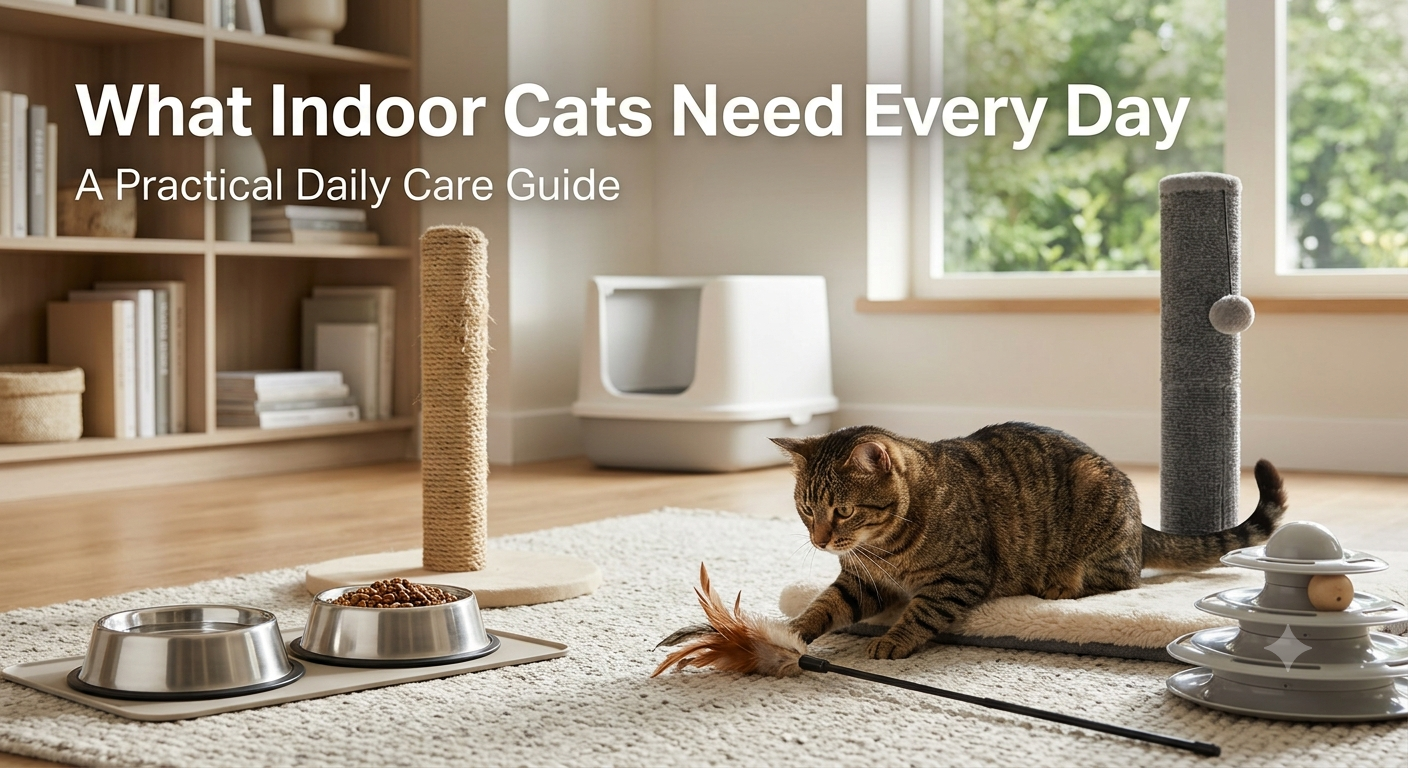
The Basic Daily Needs of an Indoor Cat
Indoor cats share the same instinctual drives as their wild ancestors: hunting, climbing, scratching, territory patrolling, and resting securely. When an indoor environment meets these natural instincts, cats are far less likely to develop boredom-related behavioral issues or stress.
Food and Feeding Routine
A predictable cat feeding routine provides structure and security for your cat while helping maintain an ideal weight.
-
Nutritional Balance: Dietary needs vary significantly based on your cat’s age, size, overall health, activity level, and spay/neuter status. Always consult your veterinarian to choose an appropriate food and determine correct portion sizes.
-
Consistent Schedule: Most adult cats do well with two to three small meals spaced throughout the day. Kittens require more frequent feedings due to high energy demands.
-
Puzzle Feeders: Instead of placing food exclusively in a standard bowl, consider using puzzle feeders or hiding small portions of kibble around the house to encourage natural foraging behaviors.
Fresh Water and Hydration
Hydration is a cornerstone of indoor cat health. Cats naturally have a low thirst drive, making clean, accessible water essential.
-
Daily Refreshing: Wash and refill your cat’s water bowls every day to prevent bacterial growth and debris buildup.
-
Separation from Food: Many cats prefer their water source placed away from their food bowl and litter box.
-
Flowing Water: Many indoor cats favor running water. Pet fountains can encourage higher fluid intake, supporting urinary tract health.
Litter Box Care
Litter box hygiene directly impacts your cat’s comfort and stress levels.
-
Daily Scooping: Scoop waste at least once or twice daily to keep the box clean and inviting.
-
Location and Count: Follow the “n+1” rule—provide one more litter box than the number of cats in your home. Place boxes in quiet, easily accessible locations away from loud appliances.
-
Regular Refreshing: Wash the box thoroughly with mild soap and replace all litter every two to four weeks depending on the litter type used.
Exercise and Play
Daily movement is vital for weight management and muscle tone. Interactive play mimics the natural predication cycle (hunt, catch, kill, eat).
Interactive Play Types
  • Wand & Feather Toys     • Laser Pointers (End with a physical catch!)
  • Soft Mice & Kicker Toys  • Tunnels & Paper Bags (Handles removed)
Aim for two to three 10-minute play sessions daily. Short, intense bursts of movement mirror a cat’s natural hunting style far better than one long marathon session.
Mental Stimulation and Enrichment
Indoor cat enrichment prevents boredom and keeps cognitive skills sharp.
-
Toy Rotation: Instead of leaving all toys out continuously, keep a small selection active and rotate them every few days to maintain novelty.
-
Vertical Space: Cats feel safe when observing their world from high ground. Cat trees, window perches, and feline-safe wall shelves expand their environment upward.
-
Scratching Surfaces: Provide both horizontal and vertical scratching posts made from sisal, cardboard, or wood to allow healthy claw shedding and territory marking.
Grooming and General Care
While cats spend a significant portion of their waking hours grooming themselves, they still benefit from human assistance.
-
Daily Brushing: Short brushing sessions reduce loose fur, lower hairball risks, and prevent painful matting (especially in long-haired breeds).
-
Basic Checks: Use grooming sessions as an opportunity to check their ears for buildup, look for eye discharge, and monitor skin texture.
Safe and Comfortable Indoor Environment
A secure home keeps indoor cat essentials accessible while eliminating common household hazards.
-
Window and Balcony Safety: Ensure window screens are sturdy and tightly fitted. Never allow unsupervised access to open balconies.
-
Hazard Removal: Keep toxic houseplants (such as lilies, pothos, and philodendrons), essential oils, small loose objects (strings, hair ties), and household cleaners out of reach.
-
Quiet Resting Areas: Provide soft beds or covered cat caves in low-traffic areas where your cat can sleep undisturbed.
Social Interaction and Attention
Every cat has a unique personality—some are demanding lap cats, while others prefer quiet companionship from across the room.
-
Respect Boundaries: Allow your cat to initiate contact when possible. Learn their body language signals (e.g., tail swishing or flattened ears mean they need space).
-
Quality Time: Spend peaceful time together through gentle petting, vocal conversation, or simply sitting in the same room while reading or working.
Health Monitoring and Veterinary Care
Even though indoor living reduces certain risks, cats are adept at hiding illness or discomfort.
-
Routine Checks: Schedule annual veterinary checkups (or biannual for senior cats) to track weight, dental health, and organ function.
-
Watch for Behavioral Changes: Monitor daily habits closely. A sudden change in eating, drinking, litter box usage, grooming frequency, or hiding behavior is often the first sign of an underlying medical concern.
-
Seek Professional Advice: Always consult a veterinarian promptly if you notice persistent behavioral shifts or physical changes.
Daily Care Essentials Summary
|
Daily Need |
Why It Matters |
Simple Ways to Provide It |
|---|---|---|
|
Nutritional Care |
Supports energy, weight, and internal organ health. |
Serve portioned meals on a consistent schedule based on vet advice. |
|
Clean Water |
Prevents dehydration and supportsKeeping a cat strictly indoors is one of the best ways to protect them from external hazards like traffic, disease, and outdoor predators. However, living inside means your cat relies entirely on you to meet their physical, mental, and emotional needs. Without outdoor exploration, an indoor cat needs intentional care to stay active, happy, and healthy. |
Creating a consistent daily cat care routine ensures your feline companion gets everything they require without making pet parenthood overwhelming.
The Basic Daily Needs of an Indoor Cat
To thrive, indoor cats need a mix of biological care and behavioral outlets. While their wild ancestors spent their days hunting and territory-marking, indoor pets rely on us to recreate those opportunities safely.
|
Daily Need |
Why It Matters |
Simple Ways to Provide It |
|---|---|---|
|
Nutritious Food |
Provides energy and essential nutrients tailored to life stage. |
Serve measured meals on a consistent daily schedule. |
|
Fresh Water |
Prevents dehydration and supports urinary tract health. |
Wash and refill water bowls daily; consider a cat fountain. |
|
Clean Litter Box |
Ensures hygiene, reduces stress, and prevents inappropriate elimination. |
Scoop at least once daily; refresh litter regularly. |
|
Interactive Play |
Prevents obesity, builds confidence, and channels predatory instincts. |
Spend 10–15 minutes twice a day with wand toys or laser pointers. |
|
Mental Enrichment |
Beats boredom and keeps cognitive skills sharp. |
Use puzzle feeders, rotate toys, and offer bird-watching perches. |
|
Safe Environment |
Prevents accidental injury, escape, or poisoning. |
Secure windows/balconies and remove toxic houseplants. |
|
Social Connection |
Strengthens the human-animal bond and supports emotional well-being. |
Offer dedicated lap time, gentle petting, or low-key companionship. |
Food and Feeding Routine
A structured cat feeding routine supports healthy digestion and prevents weight gain. Unlike free-feeding (leaving a bowl of dry food out all day), scheduled meals allow you to track exactly how much your cat eats.
What indoor cats need regarding nutrition varies widely:
-
Life Stage & Health: Kittens, adult cats, and seniors have vastly different caloric requirements.
-
Portion Control: Dietary needs depend on your cat’s age, size, overall health, activity level, and your veterinarian’s recommendations.
Instead of relying on generic bag guidelines, consult your vet to determine precise daily portion sizes. Split their daily allowance into two to four smaller meals to mimic natural hunting patterns.
Fresh Water and Hydration
Hydration is critical for indoor cat health, particularly for supporting kidney and urinary tract function. Domestic cats naturally have a low thirst drive, making clean, accessible water essential.
-
Keep It Fresh: Wash water bowls with dish soap and fill them with fresh water daily.
-
Location Matters: Place water stations away from the litter box and separate from food bowls, as many cats prefer not to drink near where they eat.
-
Flowing Water: Many indoor cats prefer moving water. Investing in a circulating pet fountain can encourage higher daily water intake.
Litter Box Care
Litter box hygiene is a non-negotiable part of indoor cat daily care. Cats are naturally clean animals, and an unclean box causes significant stress, potentially leading to house-soiling or urinary issues.
-
Daily Scooping: Scoop waste at least once daily (twice is ideal).
-
The Plus-One Rule: Provide one litter box per cat in the house, plus one extra.
-
Location: Place boxes in quiet, low-traffic areas where your cat won’t feel trapped or startled.
Exercise and Play
Indoor cats still have strong instincts to stalk, pounce, and run. Without regular physical activity, indoor pets risk developing boredom-related behaviors or excess weight.
-
Interactive Play: Dedicate 10 to 15 minutes twice a day to interactive games. Use feather wands or ribbon toys to mimic prey movement.
-
Scratching Outlets: Provide sturdy vertical and horizontal scratching posts made of sisal, carpet, or cardboard. Scratching stretches their spine, conditions their claws, and marks territory.
-
Vertical Space: Cats feel secure elevated off the ground. Offer cat trees, window perches, or wall-mounted shelves to encourage climbing.
Mental Stimulation and Enrichment
Physical exercise covers only half of indoor cat enrichment; mental exercise is equally vital.
-
Puzzle Feeders: Swap standard food bowls for treat maze balls or puzzle boards that require your cat to work for their kibble.
-
Toy Rotation: Avoid leaving all toys out at once. Keep a small selection available and swap them weekly to maintain novelty.
-
Window Entertainment: Place a perch near a window with a view of a garden or bird feeder to create an engaging “cat TV” environment.
Grooming and General Care
Daily grooming requirements depend largely on coat length and individual needs:
-
Short-haired Cats: Benefit from weekly brushing to remove loose fur and reduce hairballs.
-
Long-haired Cats: Require daily combing to prevent painful mats and tangles.
Use grooming sessions to perform a quick visual check of your cat’s eyes, ears, skin, and teeth for any unusual changes.
Safe and Comfortable Indoor Environment
Your home is your indoor cat’s entire world. Ensuring indoor cat essentials are paired with strict safety measures keeps that world secure:
-
Window & Balcony Safety: Ensure window screens are sturdy and tightly fitted. Never leave cats on open balconies unsupervised.
-
Hazard Control: Keep toxic houseplants (such as lilies, which are fatal to cats), cleaning chemicals, small loose objects, and exposed electrical cords completely out of reach.
-
Resting Zones: Provide comfortable, quiet sleeping spots in warm or sunny areas where your cat can retreat undisturbed.
Social Interaction and Attention
Cats are often perceived as independent, but they thrive on companionship. However, social preferences vary significantly between individuals.
Respect your cat’s boundaries by paying attention to their body language. Some cats love back scratches and lap naps, while others prefer simply sitting near you in the same room. Offer daily opportunities for positive engagement, but let your cat initiate or end contact on their terms.
Health Monitoring and Veterinary Care
While indoor living protects cats from external dangers, indoor cats are not completely immune to health risks. Routine veterinary check-ups—typically annual for adults and bi-annual for seniors—are critical for preventative care.
Between vet visits, monitor your cat daily for subtle changes in behavior:
-
Changes in appetite or water consumption
-
Shifts in litter box habits (straining, frequency, or missing the box)
-
Alterations in activity levels, grooming habits, or vocalization
Note: Avoid diagnosing health issues based on behavior alone. Sudden or persistent changes in behavior or physical condition warrant a prompt consultation with a veterinarian.
Example Daily Routine
Here is how you can weave these practical care tasks into a balanced daily schedule:
Morning
-
Feed: Serve the morning meal according to your established routine.
-
Refresh: Wash and refill water bowls or top off the water fountain.
-
Scoop: Clean out the litter box.
-
Check: Perform a quick visual wellness check.
Afternoon
-
Enrich: Leave out a puzzle feeder, a fresh cardboard box, or open window blinds for bird watching.
Evening
-
Play: Engage in 10–15 minutes of interactive toy play (wand, laser, or balls).
-
Feed: Serve the evening meal post-play session to complete the natural “hunt-eat-sleep” cycle.
-
Scoop: Scoop the litter box a second time.
-
Bond & Groom: Spend quiet time brushing your cat or lounging together on the couch.
Practical Daily Checklist
Use this quick checklist to track your care tasks each day:
-
[ ] Fresh food served (portioned correctly)
-
[ ] Water refreshed and bowls cleaned
-
[ ] Litter box scooped
-
[ ] Interactive play session completed
-
[ ] Mental enrichment provided
-
[ ] Dedicated social/bonding time spent
-
[ ] Basic grooming completed (if long-haired)
-
[ ] Quick health and behavior check done
FAQ
How much play time does an indoor cat need every day?
Most indoor cats thrive on 20 to 30 minutes of total play per day, ideally split into two short sessions.
How often should I scoop the litter box?
Scoop at least once per day, though twice daily is best for odor control and cat comfort.
Is it okay to leave an indoor cat alone all day while at work?
Most adult cats cope well being alone during work hours, provided they have a safe environment, clean water, food, scratching posts, and toys. Plan dedicated play and social time when you return.
Do indoor cats really need scratch posts if their nails are trimmed?
Yes. Scratching isn’t just about sharpening claws; it provides crucial muscle stretching, stress relief, and scent marking.
Why does my indoor cat seem bored even with plenty of toys?
Cats get used to stationary items. Rotate toys regularly and use interactive toys that move like real prey to keep their interest alive.
Creating a consistent environment meets all your pet’s daily needs, keeps them active, and builds a deep, lifelong bond between you and your cat.