
Understanding the Stages and Progression of Non-Small Cell Lung Cancer
Receiving a diagnosis or researching non-small cell lung cancer can feel incredibly overwhelming, especially when faced with unfamiliar medical terms and complex information. It’s completely natural to have questions and concerns during this time, and gaining a clearer understanding of the condition can help bring a sense of direction and control. Non-small cell lung cancer (NSCLC) is one of the most common types of lung cancer, and learning how it develops is an important part of understanding the bigger picture.
Understanding how the disease develops and spreads is a crucial first step in navigating potential treatment options. NSCLC typically begins in the cells that line the lungs and may grow slowly over time, but in some cases it can spread to nearby tissues or other parts of the body. This process, known as metastasis, is a key factor in determining how the condition is managed. By learning how cancer progresses, patients and their families can better follow medical advice, ask informed questions, and participate more actively in care decisions.
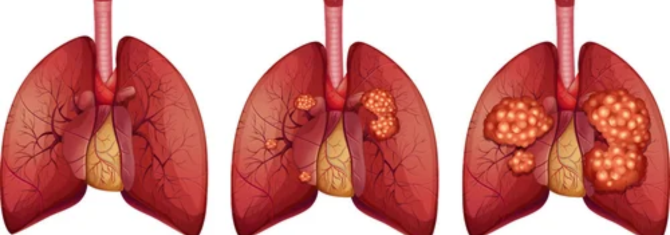
What is Non-Small Cell Lung Cancer?
Lung cancer is not a single disease. Doctors divide lung cancer into two main types based on how the cells look under a microscope. Non-small cell lung cancer is the most common type, accounting for roughly 80 to 85 percent of all lung cancer diagnoses.
Within this category, there are three primary subtypes. Adenocarcinoma usually begins in the outer parts of the lungs and is the most common type found in people who do not smoke. Squamous cell carcinoma typically starts in the central airways of the lungs. Large cell carcinoma can appear in any part of the lung and tends to grow and spread more quickly than the other two subtypes.
The TNM Staging System: How Experts Measure Progression
When oncologists discuss the progression of non-small cell lung cancer, they rely on a highly specific framework called the TNM staging system. Developed by the American Joint Committee on Cancer, this system provides a standardized way to describe exactly how far the cancer has progressed.
The letters in the TNM system stand for three distinct factors:
-
Tumor (T): This measures the size of the primary tumor in the lung and whether it has grown into nearby areas. Experts measure the tumor in centimeters.
-
Node (N): This indicates whether the cancer has spread to the lymph nodes. Lymph nodes are small, bean-shaped structures that help fight infection.
-
Metastasis (M): This describes whether the cancer has spread to distant organs or tissues in the body, such as the brain, liver, or bones.
Doctors combine the T, N, and M scores to assign an overall stage, ranging from Stage 0 to Stage IV.
The Stages of Non-Small Cell Lung Cancer
The staging process helps doctors understand the severity of the cancer and determine the most effective treatment plan. Here is how experts describe each stage of progression.
Occult Stage and Stage 0
In the occult, or hidden, stage, cancer cells are found in a patient’s sputum or mucus, but doctors cannot locate a tumor using imaging tests or bronchoscopy. The cancer has not spread.
Stage 0 is also known as carcinoma in situ. At this very early stage, abnormal cells are found only in the top lining of the airways. The cancer has not grown deeper into the lung tissue or spread outside the lung.
Stage I
Stage I non-small cell lung cancer is localized. The tumor is present in the lung tissue but has not spread to any lymph nodes or other parts of the body. Doctors further divide this stage into Stage IA and Stage IB based primarily on the size of the tumor. For example, a tumor classified as Stage IA is typically 3 centimeters or smaller across. Because it is caught early, Stage I cancer is often treated successfully with surgery.
Stage II
As the disease progresses to Stage II, the tumor may have grown larger, or the cancer may have spread to nearby lymph nodes on the same side of the chest as the original tumor. A tumor might be larger than 5 centimeters but smaller than 7 centimeters, or it might be smaller but have localized lymph node involvement. Treatment often involves a combination of surgery, chemotherapy, or radiation therapy.
Stage III
Stage III is considered locally advanced disease. The cancer has spread to lymph nodes located in the center of the chest, outside the lung itself, or above the collarbone. The tumor may have also grown into vital structures in the chest, such as the heart, the esophagus, or the trachea.
Experts divide Stage III into IIIA, IIIB, and IIIC depending on the exact size of the tumor and precisely which lymph nodes contain cancer. Because the cancer is more widespread within the chest, surgery is not always an option. Doctors frequently use a combination of chemotherapy, radiation therapy, and newer immunotherapy drugs to treat Stage III cancer.
Stage IV
Stage IV is the most advanced stage of non-small cell lung cancer. At this point, the disease has metastasized, meaning it has spread beyond the original lung. The cancer might have spread to the other lung, to the fluid surrounding the lung or heart, or to distant organs. The most common areas for non-small cell lung cancer to spread include the brain, the bones, the liver, and the adrenal glands.
While Stage IV is generally not considered curable, modern medicine offers many ways to manage the progression. Treatments focus on extending life and improving quality of life using targeted therapies, immunotherapy, chemotherapy, or palliative care.
How Doctors Monitor Progression Over Time
Cancer progression is not always a straight line. Doctors continuously monitor patients using specific tools to see if the disease is stable, shrinking, or growing.
Imaging tests are the primary method for tracking physical changes. Computed tomography scans, commonly known as CT scans, provide detailed cross-sectional images of the lungs and body. Positron emission tomography scans, or PET scans, help doctors identify areas of active cancer cell growth. Magnetic resonance imaging, or MRI, is frequently used to check for cancer spread in the brain or spinal cord.
Additionally, experts now rely heavily on biomarker testing. Doctors test the tumor tissue or blood for specific genetic mutations, such as EGFR, ALK, or ROS1. If the cancer progresses or stops responding to a current treatment, knowing these specific mutations allows doctors to switch to targeted therapy drugs designed to attack those exact genetic flaws.
Frequently Asked Questions
What are the common physical signs that lung cancer is progressing? If non-small cell lung cancer is growing or spreading, a patient might experience worsening symptoms. These can include a persistent cough that does not go away, coughing up blood, new or worsening shortness of breath, unexplained weight loss, or bone pain if the cancer has spread to the skeletal system.
How fast does non-small cell lung cancer grow? The rate of progression varies significantly from person to person. It depends on the specific subtype of the cancer, the presence of certain genetic mutations, the patient’s overall health, and how well the tumor responds to treatment. Some tumors grow very slowly over years, while others can progress in a matter of months. Regular checkups and scans with an oncologist are the only way to accurately track the speed of progression.