New Ways to Ease Back Pain: Approaches Worth Exploring
Back discomfort is one of the most common physical complaints worldwide, affecting roughly 80% of adults at some point in their lives. Whether it presents as a sudden, sharp ache after lifting a heavy box or a persistent, dull stiffness following hours at a desk, spinal discomfort can significantly impact daily quality of life, sleep, and overall mobility.
Because the spine is a complex network of bones, joints, ligaments, discs, and muscles, back pain rarely stems from a single, uniform cause. It can be triggered by muscle strain, structural changes, postural habits, or systemic health factors. Consequently, medical consensus has shifted away from viewing back pain as a problem with a single “quick fix.”
Instead of relying solely on temporary fixes or invasive procedures, healthcare providers increasingly recommend evidence-informed, multidimensional strategies. Exploring new ways to ease back pain involves understanding how movement, mind-body techniques, physical therapy, and daily ergonomics work together to support long-term spine health.
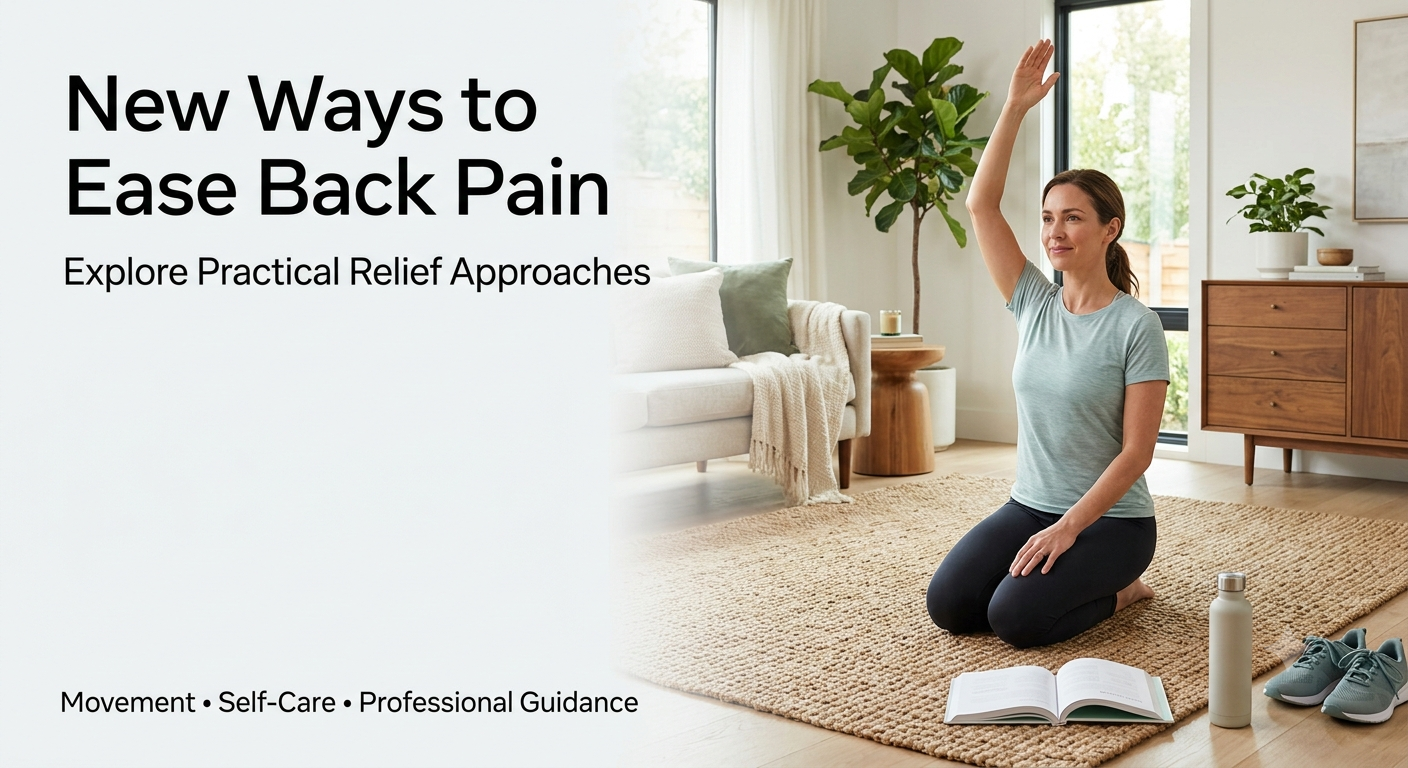
What Are Some Newer Approaches to Back Pain Management?
In recent years, clinical guidelines from major health organizations have moved away from immediate bed rest and heavy reliance on medication for primary back pain management. Modern care models emphasize non-pharmacological, active therapies tailored to an individual’s specific functional needs.
Key approaches gaining prominent support include:
-
Personalized Exercise & Active Rehabilitation: Shifting away from rigid, generalized workout sheets toward progressive strength, motor control, and mobility routines designed around a person’s baseline abilities.
-
Mind-Body Integration: Utilizing strategies such as Pain Neuroscience Education (PNE), mindfulness, and Cognitive Behavioral Therapy (CBT) to address how the central nervous system processes persistent pain signals.
-
Gradual Activity & Ergonomic Modification: Making micro-adjustments to daily environments and work setups to prevent prolonged static posture without over-restricting natural movement.
-
Targeted Manual Therapies: Applying structured spinal manipulation, dry needling, or therapeutic massage as supportive tools to facilitate active movement rather than standalone cures.
-
Digital & Telehealth Care: Utilizing digital rehabilitation platforms and remote physical therapy guidance to help individuals stay consistent with home movement programs.
Exercise and Movement: The Core of Active Care
For many years, the standard advice for acute back pain was extended bed rest. Modern clinical studies have thoroughly overturned this approach, showing that prolonged inactivity often leads to muscle deconditioning, joint stiffness, and delayed recovery.
For the majority of people experiencing non-specific back discomfort, staying appropriately active is one of the most effective paths toward natural back pain relief.
Finding the “Sweet Spot” for Movement
Movement acts as a natural lubricant for spinal joints and promotes healthy blood flow to surrounding tissues. However, the goal is not to push through sharp pain, but to find a comfortable entry point for movement:
-
Low-Impact Aerobic Exercise: Gentle walking, stationary cycling, or water aerobics help increase circulation and release natural pain-inhibiting endorphins without placing high mechanical stress on the spine.
-
Targeted Mobility Work: Controlled movements like gentle cat-cow flows, knee-to-chest stretches, or thoracic rotations can help reduce muscle guarding and restore comfortable range of motion.
-
Core & Spinal Stabilization: Strengthening the abdominal, gluteal, and back muscles creates a natural supportive brace for the lumbar spine. Exercises like bird-dogs, pelvic tilts, and modified planks are commonly used in therapeutic programs.
Note: There is no universal exercise routine appropriate for every person or every type of back condition. Exercises that feel beneficial for a muscular strain may not be suitable for an acute disc issue.
The Mind-Body Connection in Pain Perception
Understanding chronic back pain relief requires looking beyond tissue damage alone. The human nervous system plays an active role in how pain signals are processed, amplified, or suppressed.
When pain persists over weeks or months, the brain can become overly sensitive to sensory inputs—a phenomenon known as central sensitization. Stress, poor sleep hygiene, anxiety, and low mood can heighten this sensitivity, making physical sensations feel more intense.
  ┌────────────────────────┐     ┌────────────────────────┐
  │   Physical Discomfort  │ ──► │  Increased Stress &    │
  │   or Structural Strain │     │  Nervous Sensitivity   │
  └────────────────────────┘     └───────────┬────────────┘
              ▲                              │
              │                              ▼
  ┌───────────┴────────────┐     ┌────────────────────────┐
  │ Reduced Activity &     │ ◄── │ Muscle Guarding, Poor  │
  │ Disrupted Sleep        │     │ Mood & Fear of Movement│
  └────────────────────────┘     └────────────────────────┘
Exploring mind-body techniques is not an implication that discomfort is imaginary or “all in your head.” Rather, it acknowledges that modulating the nervous system can alter the physical experience of pain:
-
Cognitive Behavioral Approaches: CBT helps individuals reframe thoughts around movement, reduce fear-avoidance behaviors, and break the cycle of stress-induced muscle tension.
-
Pain Neuroscience Education (PNE): Learning how the brain interprets danger signals can reduce anxiety about movement, allowing people to engage in rehabilitation with greater confidence.
-
Mindfulness & Relaxation Strategies: Controlled diaphragmatic breathing and progressive muscle relaxation help down-regulate a hyperactive sympathetic nervous system (“fight-or-flight” response).
Physical Therapy and Personalized Rehabilitation
Navigating back pain relief options can be overwhelming without professional guidance. A licensed physical therapist (PT) serves as a valuable partner in identifying movement patterns, muscular imbalances, or joint limitations that contribute to ongoing discomfort.
During an evaluation, a physical therapist typically assesses:
-
Spinal posture, flexibility, and overall movement quality
-
Muscular strength and endurance in the core, hips, and back
-
Specific daily activities or occupational tasks that trigger symptoms
-
Personal health goals, whether returning to recreational sports or walking comfortably
Using this evaluation, a physical therapist designs a personalized rehabilitation plan that evolves over time. Rather than relying solely on passive clinic treatments, a well-structured program empowers individuals with self-management tools and home routines tailored to their daily lives.
Everyday Changes That Support Spine Health
In addition to targeted exercise, small adjustments to daily routines can significantly reduce unnecessary stress on the lower back.
-
Break Up Prolonged Sitting: Sitting for extended periods increases intradiscal pressure and can fatigue postural muscles. Try setting a timer to stand up, stretch, or walk for 1–2 minutes every hour.
-
Optimize Your Ergonomics: Adjust your desk chair so your feet rest flat on the floor, your knees are at a 90-degree angle, and your computer monitor sits at eye level to prevent forward head posture.
-
Practice Safe Lifting Habits: When picking up heavy items, bend at your knees and hips rather than rounding your lower back. Hold objects close to your body and avoid twisting your torso while lifting.
-
Prioritize Sleep Quality: A supportive mattress that maintains neutral spinal alignment can prevent morning stiffness. Side sleepers may benefit from placing a pillow between their knees, while back sleepers often find comfort with a pillow under their knees.
Non-Drug Options: Massage, Manipulation, and Heat
Non-pharmacological modalities can play a helpful supportive role in a comprehensive management plan, particularly during acute flare-ups.
|
Approach |
What It Involves |
Potential Role |
Primary Consideration |
|---|---|---|---|
|
Heat Therapy |
Heating pads, warm baths, or wrap-around heat packs. |
Relaxes tight muscles, increases local blood flow, and eases acute stiffness. |
Best used prior to gentle stretching or activity; temporary symptom relief. |
|
Therapeutic Massage |
Soft-tissue manipulation by a licensed massage therapist. |
Reduces muscular tension, lowers stress, and improves short-term mobility. |
Works best when combined with active exercise rather than as a standalone fix. |
|
Spinal Manipulation |
Hands-on joint thrusts or mobilizations by a chiropractor, PT, or osteopath. |
Restores temporary joint movement and alleviates acute mechanical stiffness. |
Suitability depends on the underlying cause; requires thorough initial screening. |
|
Acupuncture |
Insertion of fine needles at specific anatomical points. |
May help stimulate natural pain-relieving pathways and relieve muscle tightness. |
Response varies by individual; should complement active rehabilitation strategies. |
When Back Pain Needs Immediate Medical Attention
While the vast majority of back pain episodes are benign and resolve with conservative care, certain symptoms can indicate an underlying medical condition requiring urgent evaluation.
Seek Immediate Medical Evaluation If You Experience:
Loss of Bowel or Bladder Control: New incontinence or difficulty urinating.
Saddle Anesthesia: Sudden numbness or altered sensation in the groin, buttocks, or inner thighs.
Progressive Neurological Weakness: Sudden weakness in the legs, such as foot drop or difficulty standing on tiptoes.
Trauma-Related Pain: Severe pain following a fall, motor vehicle accident, or significant physical injury.
Systemic Symptoms: Unexplained fever, chills, night sweats, or unexpected weight loss accompanying back discomfort.
History of Serious Conditions: New onset back pain with a history of cancer, immunocompromise, or long-term steroid use.
Comparing New vs. Established Approaches
Understanding how modern strategies build upon traditional methods helps in selecting the right approach for lower back pain relief.
|
Approach |
What It Involves |
Potential Role |
Who May Consider It |
Important Considerations |
|---|---|---|---|---|
|
Personalized Active Rehabilitation |
Tailored movement, strengthening, and mobility work. |
Builds long-term spinal capacity and functional strength. |
Anyone with non-specific, recurring, or persistent back discomfort. |
Requires ongoing personal consistency and gradual progression. |
|
Pain Neuroscience & CBT |
Educational and psychological strategies addressing pain processing. |
Helps manage persistent pain pathways and reduces movement-related fear. |
Individuals managing long-standing, chronic pain conditions. |
Does not imply pain is exaggerated; requires active participation. |
|
Passive Modalities (Heat, TENS) |
External tools providing temporary sensory relief. |
Comforts acute flare-ups to help facilitate active movement. |
Those seeking short-term symptom management during acute episodes. |
Provides temporary relief; should not replace active movement strategies. |
|
Traditional Strict Bed Rest |
Complete immobility for several days. |
Historically recommended, now largely discouraged. |
Rarely indicated for standard mechanical back pain. |
Can lead to muscle weakness, joint stiffness, and prolonged recovery. |
Questions to Ask Your Healthcare Professional
When discussing your back health with a doctor, physical therapist, or specialist, taking a proactive list of questions can help guide a constructive conversation:
-
“What do you believe is the primary source or driver of my current back symptoms?”
-
“Are there specific red-flag symptoms I should watch out for at home?”
-
“Is physical therapy appropriate for my condition, and what type of exercises should I focus on?”
-
“Are there daily activities or movements I should modify temporarily while recovering?”
-
“How can I safely maintain physical fitness while managing this discomfort?”
-
“What non-pharmacological management strategies do you recommend for my situation?”
Frequently Asked Questions
What is the best way to ease back pain?
There is no single “best” method that works universally for everyone. Current evidence supports a combination of staying appropriately active, engaging in targeted strengthening exercises, utilizing good ergonomics, and managing stress levels.
Can exercise help back pain?
Yes. Gentle, progressive exercise is widely recognized as one of the most effective non-drug strategies for managing and preventing non-specific back pain. Movement helps nourish spinal tissues, strengthen supportive core muscles, and maintain flexibility.
What exercises are commonly used for back pain?
Low-impact exercises such as walking, core stabilization drills (like bird-dogs and pelvic tilts), gentle spinal mobility work, and swimming are frequently recommended. However, routines should always be adjusted to individual comfort levels.
Can stress make back pain worse?
Yes. Chronic stress increases muscle tension and can make the central nervous system more sensitive to pain signals. Managing stress through relaxation techniques, good sleep, and exercise can positively influence pain management.
When should I see a doctor about back pain?
You should consult a doctor if your pain is severe, does not improve after a few weeks, radiates down your leg accompanied by numbness or weakness, or occurs alongside red-flag symptoms like fever, unexplained weight loss, or bladder issues.
Are non-drug approaches effective for back pain?
Clinical guidelines strongly recommend non-drug options—such as physical therapy, exercise, mind-body strategies, and structured movement—as the first-line approach for primary back pain management.
Can back pain go away on its own?
Many acute episodes of uncomplicated back strain resolve or improve significantly within a few weeks with gentle activity, time, and basic self-care. However, if discomfort becomes recurrent or persistent, professional evaluation is recommended.