Learn More About Rent to Own Lawn Mowers
Maintaining a healthy lawn requires the right equipment, but purchasing a quality mower upfront—especially larger riding or zero-turn models—can represent a significant expense. For homeowners and property managers looking to spread expenses over time, rent to own lawn mowers provide an alternative pathway to acquiring essential lawn care tools.
Understanding how these agreements operate, what mower options exist, and how costs are structured will help you decide if a rental-purchase arrangement aligns with your budget and property needs.
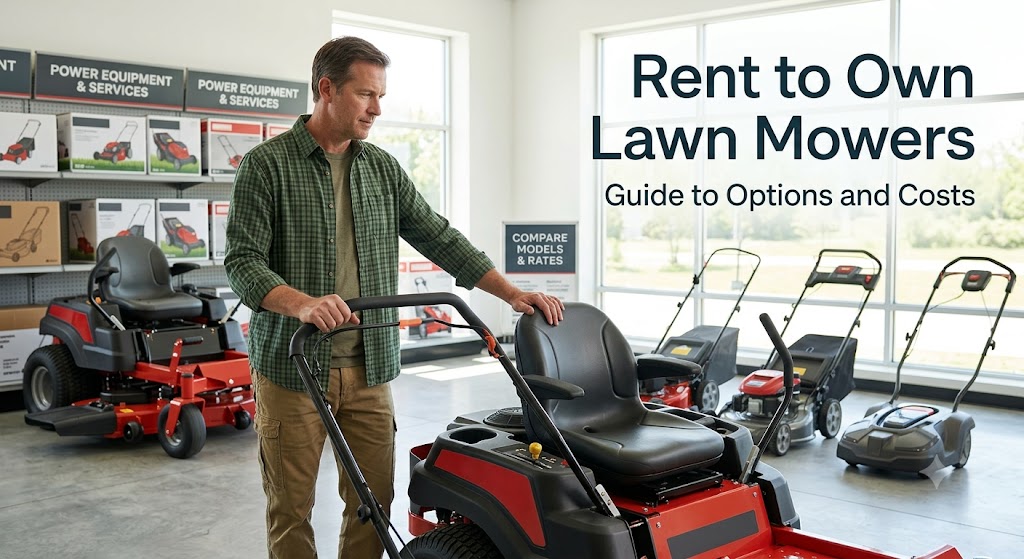
What Is a Rent to Own Lawn Mower?
A rent-to-own (RTO) or lease to own lawn mowers program allows you to take home equipment immediately while making regular, scheduled payments over a specified period.
Unlike traditional retail purchases or standard loan agreements, the provider (or lessor) retains legal ownership of the equipment throughout the payment term. You gain full ownership of the mower only after completing all scheduled payments or exercising an early buyout option outlined in your agreement.
A key distinction of RTO arrangements is flexibility: in many standard consumer rental-purchase contracts, you have the option to return the equipment during the term to terminate the agreement, provided you are current on scheduled payments.
How Rent to Own Lawn Mower Agreements Work
-
Selection & Application: You select an eligible lawn mower from a participating retailer or dealer. You then complete an application with the RTO or leasing provider.
-
Approval & Terms: Providers evaluate factors such as income stability, residential address, and identity verification. While traditional credit scores may carry less weight than with standard bank loans, approval and credit checks depend on specific provider criteria.
-
Initial Payment: An initial payment, application fee, or security deposit is usually paid at signing.
-
Scheduled Payments: You make weekly, biweekly, or monthly payments based on your contract structure.
-
Completion or Return: Once the final payment (or residual buyout) is made, the title transfers to you. Alternatively, if your lawn care needs change, you can often return the equipment according to the contract’s return policy.
Types of Lawn Mowers Available for Rent-to-Own
Selecting the right machine depends on property size, terrain, and storage capacity. RTO inventory across major dealers typically includes several categories:
Push Lawn Mowers
Compact and lightweight, push mowers rely on human power to move forward while the engine or battery drives the blades.
-
Best For: Flat yards under 1/4 acre.
-
Considerations: Low maintenance requirements and easy storage, though physically demanding for larger spaces.
Self-Propelled Lawn Mowers
Equipped with a drive system that propels the wheels forward, reducing user fatigue on slopes or thick turf.
-
Best For: Yards between 1/4 acre and 1/2 acre with mild inclines.
-
Considerations: Offers an ideal middle ground between push mowers and riding units.
Riding Lawn Mowers & Lawn Tractors
Offering riding mower payment plans allows homeowners with larger properties to access comfortable, sit-down cutting capability.
-
Best For: Properties between 1/2 acre and 2 acres.
-
Considerations: Require dedicated storage space (shed or garage) and routine engine maintenance (oil, filters, belts).
Zero-Turn Mowers
If you are evaluating rent to own zero turn mowers, these commercial and residential machines feature rear-wheel steering for tight turning radiuses and higher cutting speeds.
-
Best For: Large properties (1.5+ acres), yards with numerous trees, flowerbeds, or complex obstacles.
-
Considerations: Typically higher base retail price, requiring larger weekly or monthly rental payments.
Battery-Powered Lawn Mowers
Modern cordless electric mowers offer quiet operation, push-button starts, and freedom from gas and oil maintenance.
-
Best For: Small to medium suburban lawns.
-
Considerations: Battery runtime determines how much area you can cut on a single charge.
Costs and Payment Factors to Compare
Evaluating an RTO contract requires looking closely at total long-term expenses rather than just the advertised periodic payment.
-
Total Cost of Ownership: Because RTO agreements bundle rental fees and administrative structures, the cumulative sum of all scheduled payments is generally higher than the initial retail cash price.
-
Payment Schedules: Check whether payments are billed weekly, biweekly, or monthly. A payment advertised as “$25 per week” equals roughly $108 per month.
-
Early Purchase Options: Most agreements offer an early buyout provision. Paying off the contract within a specified timeframe (e.g., 90 days) often reduces the overall markup significantly.
-
Maintenance & Warranties: Clarify who handles mechanical repairs. Some RTO providers bundle basic service plans or honor manufacturer warranties during the agreement, while others require the renter to cover maintenance.
Comparing Your Options
|
Option |
Ideal For |
Approval Basis |
Ownership Timing |
Total Cost Profile |
|---|---|---|---|---|
|
Cash Purchase |
Buyers with available savings |
N/A (No approval needed) |
Immediate |
Lowest total cost (MSRP) |
|
Traditional Financing |
Buyers with established credit |
Strict credit score check |
Immediate (bank holds lien) |
Retail price + fixed interest rate |
|
Rent to Own (RTO) |
Flexible terms / alternative payment paths |
Income & stability focus |
End of term or buyout |
Higher total cost than retail |
|
Short-Term Rental |
One-time or seasonal project needs |
Valid ID & security deposit |
Never (returned to dealer) |
Pay-per-day or pay-per-week fee |
|
Buying Used Equipment |
Budget-conscious buyers |
Cash payment |
Immediate |
Low upfront cost; variable condition |
What to Check Before Signing an Agreement
Before entering a binding agreement for rent to own riding lawn mowers or push mowers, review the following contract details:
-
The Cash Price vs. Total Rent-To-Own Price: Compare the manufacturer’s suggested retail price (MSRP) to the total amount you will pay over the full contract duration.
-
Reinstatement Policies: Understand what happens if you miss a payment. Check whether you can resume the contract without losing previous payments if equipment is returned.
-
Grace Periods and Late Fees: Identify exact fee structures for late or returned payments.
-
Delivery and Setup Costs: Ask if equipment delivery, deck leveling, or initial assembly incurs extra fees.
Questions to Ask the Provider
-
[ ] What is the exact total dollar amount required to complete full ownership under the standard schedule?
-
[ ] Is there an early buyout option, and how is the discount calculated?
-
[ ] What maintenance or repairs am I responsible for versus the provider?
-
[ ] Does the mower come with the manufacturer’s original warranty?
-
[ ] What are the exact terms and procedures if I need to return the equipment before the contract ends?
Frequently Asked Questions
Is a credit check required for rent-to-own lawn mowers?
Requirements vary by provider. While many RTO options focus heavily on verified income, employment, and banking history rather than strict credit scores, providers may run soft or hard inquiries depending on their underwriting rules.
Can I return a rent-to-own mower if I no longer need it?
In standard rental-purchase agreements, you can usually return the mower to terminate future payment obligations. However, you will not receive a refund for previously made rental payments, and the equipment must be in good operating condition.
Who covers mechanical repairs during the rental period?
Responsibility depends on the contract. Some RTO companies include service coverage or loaner equipment during the lease period, while others require the customer to handle standard wear-and-tear and engine maintenance.
What happens if I want to buy the mower early?
Most agreements contain early purchase options. Exercising an early buyout usually reduces the overall cost compared to making every scheduled payment through the full term.
Are commercial landscaping mowers available through RTO?
Yes, many commercial dealers offer specialized lawn mower financing options and lease-to-own programs tailored for commercial landscapers or large property owners.
Making the Right Choice for Your Property
Exploring rent-to-own lawn mowers allows property owners to manage outdoor maintenance needs without a single large upfront cash outlay. While RTO agreements offer lower initial barriers to entry and flexible return options, they generally carry higher cumulative costs than buying outright.
By matching mower capacity to your yard’s terrain, reading all contract terms thoroughly, and evaluating early buyout options, you can choose an arrangement that keeps your lawn manicured while staying within your financial plan.