Learn More About Protecting Your Eyes From Diabetes
Diabetes affects blood vessels throughout the body, and the delicate micro-vessels in the retina (the back of the eye) are especially vulnerable. Unmanaged high blood sugar can damage these fragile vessels, leading to swelling, leakage, or the growth of abnormal new blood vessels—a condition known as diabetic retinopathy.
Because early-stage diabetic eye disease rarely causes noticeable symptoms or pain, significant vascular changes can occur long before you notice any shift in your vision.
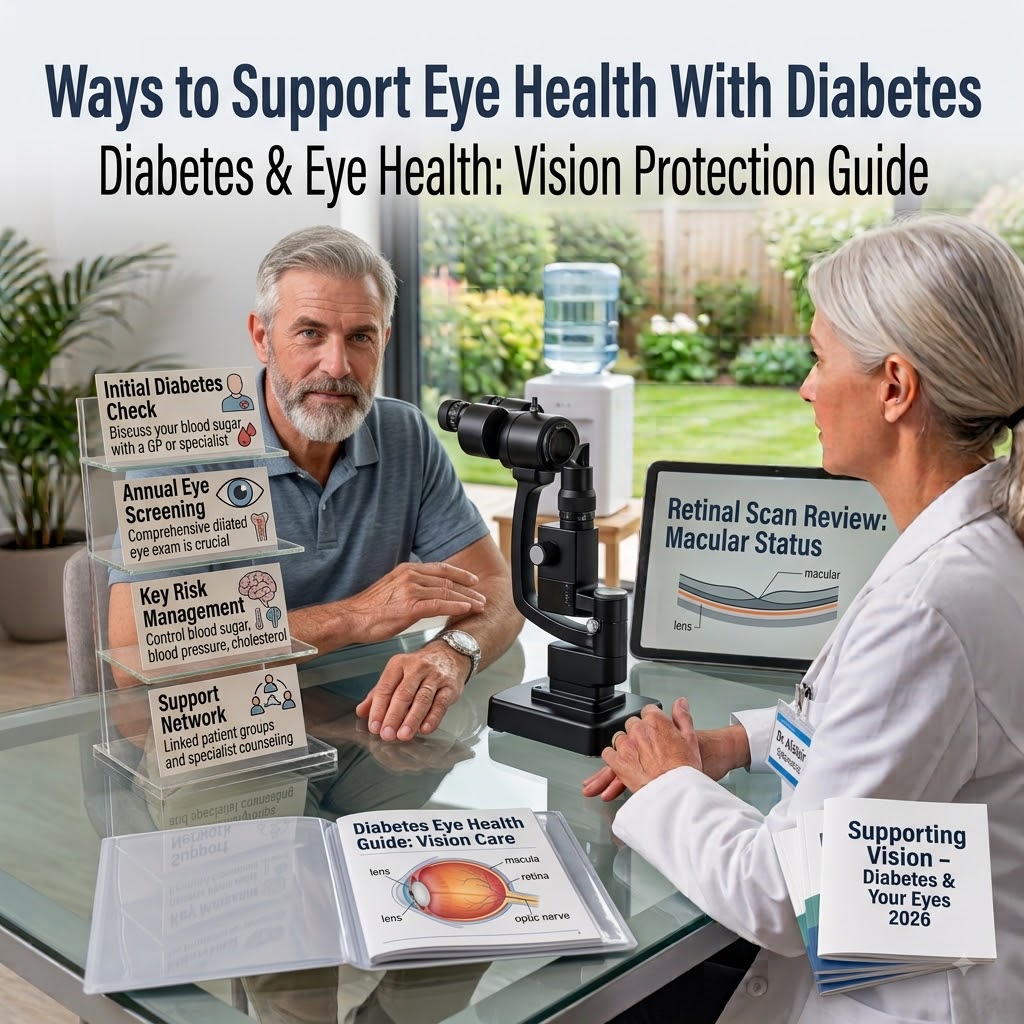
Key Pillars of Diabetic Eye Care
Protecting your sight requires a dual approach: direct eye monitoring by a specialist combined with daily diabetes management.
                      [ Protective Eye Strategy ]
                                   |
         +-------------------------+-------------------------+
         |                                                   |
[ Direct Eye Care ]                                [ Metabolic Control ]
         |                                                   |
• Comprehensive dilated eye exams                  • Target blood glucose (A1C)
• Early symptom reporting                          • Control blood pressure
• Prompt treatment for leaks/swelling             • Manage lipid/cholesterol levels
Essential Habits for Protecting Your Vision
-
Schedule Annual Dilated Eye Exams: Standard vision tests or quick screenings for glasses cannot detect early retinal damage. A comprehensive dilated eye exam allows an eye care specialist (optometrist or ophthalmologist) to view the back of your eye directly and identify fluid leakage, swelling, or vessel changes early.
-
Manage Blood Glucose (A1C): Chronic high blood sugar weakens retinal blood vessel walls. Keeping your blood glucose within your target range significantly lowers the risk of developing retinopathy or slows its progression if already present.
-
Control Blood Pressure and Cholesterol: High blood pressure puts extra strain on damaged eye blood vessels, increasing the risk of swelling (macular edema). Elevated cholesterol can lead to fatty deposits in the retina. Keeping blood pressure and lipid levels balanced provides essential protection for ocular blood vessels.
-
Maintain Prescribed Diabetes Therapies: Take medications or insulin as directed by your healthcare team, and attend routine diabetes checkups to adjust treatment plans as needed.
-
Adopt Heart-Healthy Lifestyle Habits: Balanced nutrition and regular physical activity help improve insulin sensitivity, circulation, and blood pressure regulation.
-
Avoid Smoking: Smoking damages blood vessels throughout the body, worsens vascular inflammation, and accelerates the progression of diabetic eye complications.
When to Seek Immediate Eye Care
Do not wait for your annual exam if you notice sudden or persistent changes in your sight. Contact an eye specialist promptly if you experience:
|
Warning Symptom |
Potential Underlying Issue |
|---|---|
|
New or Increasing “Floaters” |
Spots, cobwebs, or dark strings floating in your vision, which may indicate minor bleeding into the eye’s vitreous gel. |
|
Blurry or Fluctuating Vision |
Sudden cloudiness or frequent changes in focus caused by swelling in the center of the retina (macula). |
|
Dark or Empty Areas |
Patchy vision loss or a dark “curtain” coming across your field of vision, which can signal a retinal tear or detachment. |
|
Poor Night Vision or Faded Colors |
Reduced contrast sensitivity or difficulty seeing in low-light environments. |
The Power of Early Detection
Early-stage diabetic retinopathy is often manageable, and modern clinical treatments—such as specialized anti-VEGF injections or targeted laser therapies—can halt further vessel leakage and preserve vision. Because early interventions are most effective before permanent damage occurs, regular screening and proactive health management are your strongest defenses against severe vision loss.
The Four Stages of Diabetic Retinopathy
1. Mild Non-Proliferative Diabetic Retinopathy (NPDR)
-
What Happens: High blood sugar levels weaken the walls of small retinal blood vessels. Tiny balloon-like swellings called microaneurysms form in these vessel walls.
-
Symptoms: Usually completely symptomless. Vision remains normal.
2. Moderate Non-Proliferative Diabetic Retinopathy (NPDR)
-
What Happens: As vessel damage accumulates, blood vessels that nourish the retina become distorted and begin to lose their ability to transport blood. They start leaking fluid, lipids, and small amounts of blood into the retina, forming “hard exudates.”
-
Symptoms: Often still asymptomatic, though mild blurriness can occur if fluid leaks near the center of the retina.
3. Severe Non-Proliferative Diabetic Retinopathy (NPDR)
-
What Happens: Many more blood vessels become blocked, cutting off oxygen and nutrient supplies to large areas of the retina. Deprived of oxygen, the retina signals the body to grow new blood vessels to replace the blocked ones (vascular endothelial growth factor or VEGF release).
-
Symptoms: Vision may begin to blur or fluctuate, though some individuals still notice no changes despite significant internal damage.
4. Proliferative Diabetic Retinopathy (PDR)
-
What Happens: Advanced stage marked by neovascularization—the growth of new, fragile blood vessels along the retina and clear vitreous gel inside the eye. Because these new vessels are weak, they frequently leak blood directly into the eye. Scar tissue can also form, pulling the retina away from the back of the eye (retinal detachment).
-
Symptoms: Severe vision loss, dark spots or “floaters” blocking vision, blurred areas, or total vision impairment.