Learn More About Great Lakes Cruises for Seniors in 2026
Cruising the Great Lakes offers senior travelers a distinctive way to explore North America’s inland seas. With no ocean swells, calm freshwater sailing, and mostly domestic ports, these voyages combine scenic views with small-ship comfort. For 2026, the region features 10 vessels across 7 cruise lines—ranging from expedition ships to U.S.-flagged coastal cruisers.
Navigating the options requires evaluating ship styles, physical mobility demands, inclusions, and logistical details.
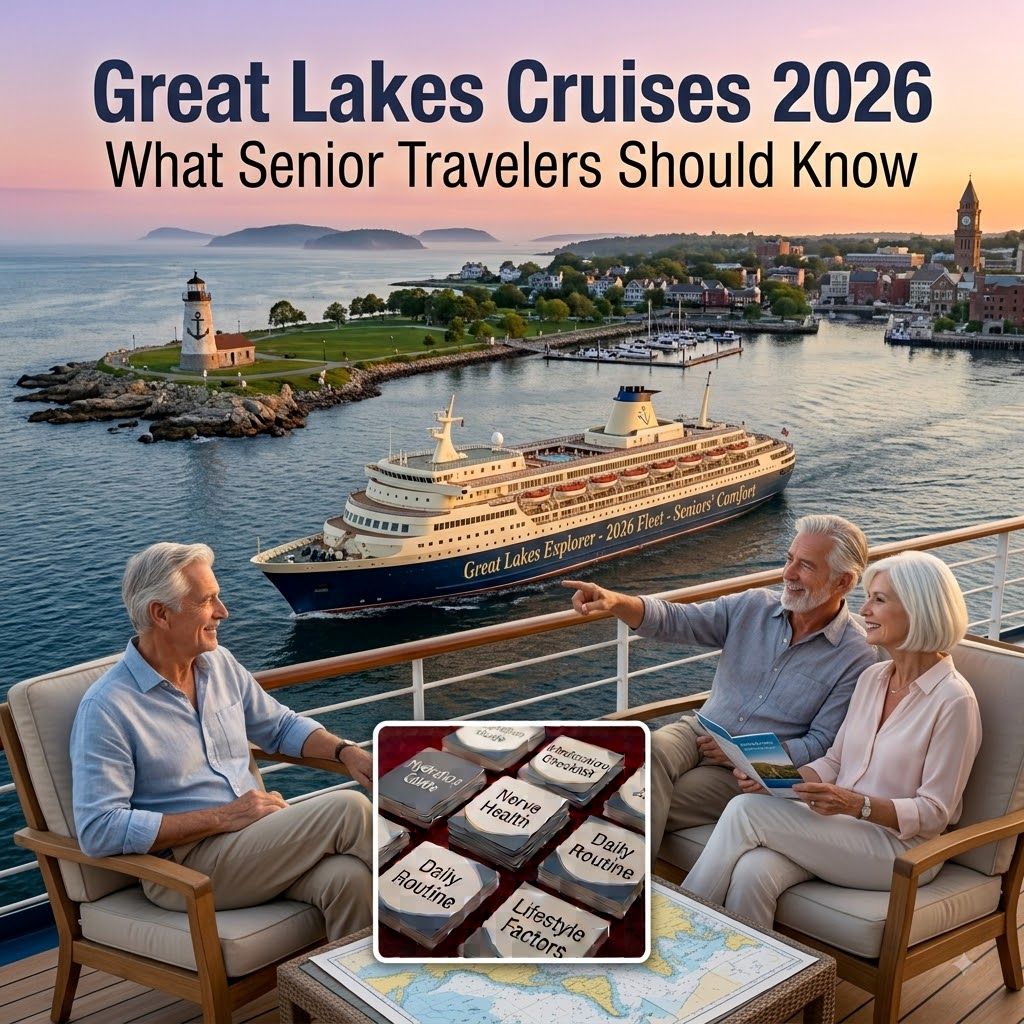
Why Great Lakes Cruises Appeal to Seniors
-
Small-Ship Intimacy: Ships carrying between 130 and 378 passengers eliminate the high-volume crowds, long embarkation lines, and massive deck walks common on ocean mega-ships.
-
Calm Freshwater Sailing: Traveling inland waterways minimizes seasickness risk, making it ideal for travelers sensitive to open ocean motion.
-
Scenic Proximity: Vessels stay close to shore, offering constant views of lighthouses, coastal cliffs, shipping canals, and island chains.
-
Simplified Travel Logistics: Regional homeports like Chicago, Milwaukee, Detroit, Buffalo, and Toronto make flight arrangements straightforward for North American residents.
Iconic Destinations & Signature Experiences
   [Lake Superior] ---- Soo Locks ---- [Lake Huron] ---- Welland Canal ---- [Lake Ontario]
          |                                 |                                 |
    Thunder Bay                      Mackinac Island                    Niagara Falls
-
Mackinac Island, Michigan: Car-free streets require transportation by foot, bicycle, or horse-drawn carriage. Visitors can explore historic Fort Mackinac and the porch at the Grand Hotel.
-
Niagara Falls & Welland Canal: Ships transit the 8-lock canal connecting Lake Erie and Lake Ontario. Guided excursions bring guests near the misty spray of Niagara Falls.
-
Sault Ste. Marie & Soo Locks: Passengers witness ships navigating the locks connecting Lake Superior and Lake Huron.
-
Milwaukee & Detroit: Cultural ports offering access to the Harley-Davidson Museum, the Detroit Institute of Arts, and the Henry Ford Museum of American Innovation.
Comparing Ship Styles: Expedition, Luxury, and Traditional
|
Feature |
Expedition Cruises (e.g., Viking Expeditions) |
Luxury Cruises (e.g., Ponant, Victory) |
Traditional Small Ships (e.g., Pearl Seas, ACL) |
|---|---|---|---|
|
Vessel Focus |
Research, nature, and scientific enrichment |
Refined dining, upscale service, elegant decor |
Relaxed, classic American-style small-ship cruising |
|
Excursion Style |
Zodiacs, kayaks, nature walks (all optional) |
Guided city tours, cultural excursions, fine dining |
Standard motorcoach tours, historic walks, shuttles |
|
Onboard Atmosphere |
Modern, Scandinavian design; adults-only |
Continental/European flair; small guest counts |
Casual, unhurried, highly accessible |
Itinerary Styles & Cruise Lengths
-
7- to 9-Day Regional Voyages: Focus on specific clusters, such as Lake Michigan and Lake Huron, or Lake Erie up to Toronto. American Cruise Lines introduced new 9-day options for 2026 sailing round-trip from Buffalo, omitting international border stops.
-
10- to 15-Day Multi-Lake Grand Cruises: Cover all five Great Lakes or link the lakes with the St. Lawrence Seaway. American Cruise Lines offers a 14-day itinerary traversing the regional lock systems.
Excursions, Walking Requirements & Mobility
Excursion intensity varies across ports:
-
Cobblestones and Incline: Mackinac Island features gentle slopes and historic brick paths. Carriage tours reduce extended walking, though boarding carriages requires step negotiation.
-
Docking vs. Tender Ports: Modern small ships dock directly at most ports. However, select island stops or natural bays require transferring to tender boats or Zodiacs.
-
Pacing Choices: Lines offer graded excursion ratings (Easy, Moderate, Active). Low-impact options usually include motorcoach shuttles and seated cultural lectures.
Accessibility & Onboard Facilities
Checklist for Senior Mobility:
 [ ] Elevator coverage to all passenger decks
 [ ] Accessible stateroom availability (roll-in showers, wider frames)
 [ ] Smooth gangway angles during varying dock water levels
 [ ] Clear onboard medical capabilities & doctor availability
-
Elevators & Layouts: Most modern vessels include elevator access across passenger decks. Confirm whether small expedition tenders require stairs.
-
Medical Support: Small ships carry limited medical facilities compared to large ocean liners. Verify if a licensed physician or paramedic is onboard for your specific itinerary.
Fare Inclusions Breakdown
Understanding upfront pricing helps prevent unexpected expenses:
-
All-Inclusive Fares: Typically cover staterooms, onboard meals, beer and wine during meal service, Wi-Fi, and at least one guided shore excursion in every port.
-
Selective Inclusions: Some lines include pre-cruise hotel stays and port transfers, but charge extra for premium shore tours, specialty drinks, or onboard gratuities.
-
Border Logistics: Crossing between U.S. and Canadian waters requires a valid passport, except on U.S.-flagged coastal vessels sailing domestic-only routes.
Best Times of Year to Cruise
-
May to June (Early Season): Cooler daytime temperatures, vibrant spring foliage, fewer shore crowds, and lower initial fares.
-
July to August (Peak Summer): Warmest weather and calmest lake conditions; higher demand and busier port towns.
-
September to October (Fall Foliage): Crisp autumn air, dramatic foliage along northern shorelines, and ideal conditions for sightseeing tours.
Key Questions to Ask Before Booking
-
Does this itinerary sail into Canadian waters, requiring a valid passport and border clearances?
-
Are shore excursions included in the base fare, or billed separately per port?
-
What physical exertion level is required to embark tenders or participate in primary tours?
-
What level of medical care and emergency evacuation coverage is maintained onboard?
-
What is the ship’s cancellation and trip delay policy for weather-related route modifications?