Learn More About Common Types of Skin Rashes and Their Causes
A skin rash—clinically known as dermatitis or an exanthem—is an inflammatory response that alters the texture, color, or overall appearance of the skin. Rashes develop when the immune system responds to internal or external triggers, causing blood vessels to dilate, surface tissues to swell, and nerve endings to signal itch or pain.
Because many rashes look remarkably similar despite having vastly different causes, identifying the underlying trigger is essential before attempting targeted treatment.
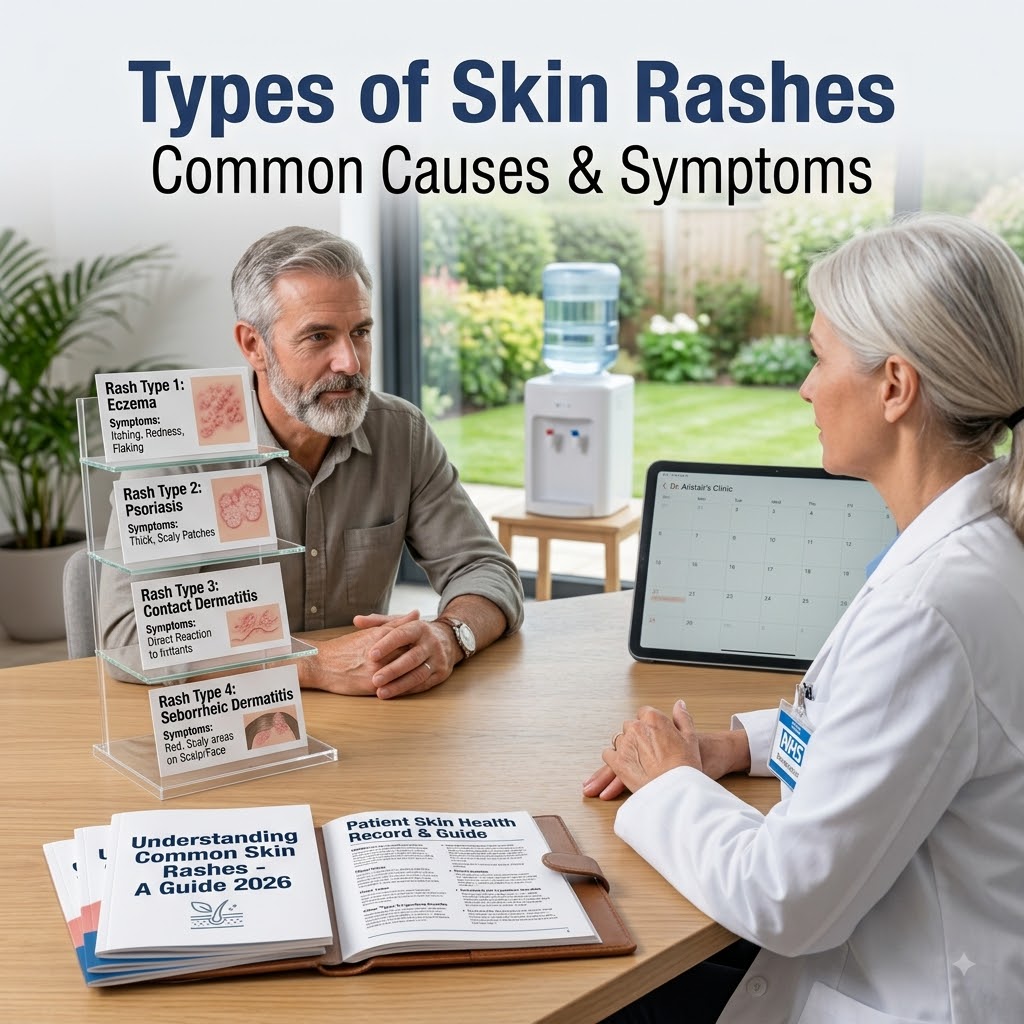
1. Common Categories of Skin Rashes
                           [ Common Rash Categories ]
                                       |
        +------------------------------+------------------------------+
        |                              |                              |
[ Environmental & Allergic ]   [ Chronic & Inflammatory ]    [ Infectious & Microbal ]
        |                              |                              |
  • Contact Dermatitis           • Atopic Dermatitis (Eczema)   • Fungal (Ringworm, Tinea)
  • Urticaria (Hives)            • Psoriasis                    • Viral (Shingles, Measles)
  • Heat Rash (Miliaria)         • Rosacea                      • Bacterial (Impetigo)
-
Contact Dermatitis: Occurs when the skin directly touches an irritating substance or allergen.
-
Irritant Contact Dermatitis: Caused by harsh chemicals, soaps, solvents, or friction breaking down the protective barrier.
-
Allergic Contact Dermatitis: An immune reaction triggered by specific substances like poison ivy, nickel, latex, or fragrances.
-
-
Eczema (Atopic Dermatitis): A chronic inflammatory condition linked to skin barrier dysfunction. It causes dry, intensely itchy patches that often appear in skin folds (elbows, behind knees) and on the face or wrists.
-
Hives (Urticaria): Raised, red or skin-colored welts (wheals) that appear suddenly. They are typically driven by histamine release from foods, insect stings, temperature changes, or medications. Individual hives often shift or fade within 24 hours.
-
Heat Rash (Miliaria): Develops when sweat ducts become blocked, trapping sweat beneath the skin. It presents as tiny, prickling bumps or clear blisters, common in hot, humid weather or under heavy clothing.
-
Psoriasis: An autoimmune condition that accelerates skin cell buildup. It creates thick, scaly plaques—frequently silvery-white—on red or darkened skin, most commonly found on knees, elbows, and the scalp.
-
Fungal Rashes: Caused by an overgrowth of microscopic fungi (like Candida or dermatophytes). Examples include ringworm, athlete’s foot, and jock itch. They often form expanding ring-like patterns or intensely red, moist patches in body folds.
2. Triggers and Appearance Differences
Rashes vary widely depending on their root mechanism:
|
Rash Category |
Typical Visual Appearance |
Common Locations |
Key Symptoms |
|---|---|---|---|
|
Contact Dermatitis |
Red bumps, dry patches, or fluid blisters |
Hands, neck, wrists, or contact points |
Stinging, burning, or localized itch |
|
Atopic Eczema |
Dry, scaly, thickened or leathery skin |
Elbow creases, knees, neck, and cheeks |
Intense, persistent itching (worse at night) |
|
Hives (Urticaria) |
Raised, swollen welts with defined borders |
Anywhere on the body; can shift locations |
Sudden, sharp itching or burning |
|
Psoriasis |
Thick plaques with silvery scales |
Knees, elbows, lower back, scalp |
Mild to severe itch, skin cracking, or soreness |
|
Fungal Rashes |
Circular borders, scaling edges, central clearing |
Groin, feet, under breasts, armpits |
Constant itch, raw feeling, or skin peeling |
3. General Protective Skin-Care Measures
While specific underlying causes require distinct treatments (such as antifungals for tinea or prescription steroids for moderate eczema), basic protective steps help soothe compromised skin barriers:
-
Keep it Clean and Gentle: Wash the area gently with lukewarm water and a mild, fragrance-free cleanser. Avoid vigorous scrubbing.
-
Moisturize Frequently: Apply thick, fragrance-free barrier creams or ointments containing petrolatum, ceramides, or glycerin to seal in moisture.
-
Avoid Scratching: Scratching damages the outer skin layer, exacerbates inflammation, and introduces bacteria from under the fingernails, increasing the risk of secondary infections.
-
Eliminate Known Irritants: Switch to scent-free laundry detergents, avoid tight synthetic clothing, and pause the use of active cosmetic ingredients (like AHAs, BHAs, or retinol) near the rash.
4. Why Root Cause Identification Matters
Applying an incorrect over-the-counter treatment can make a rash significantly worse:
-
Applying hydrocortisone cream to a fungal infection (like ringworm) can temporarily calm redness while suppressing the skin’s local immune response, allowing the fungus to spread rapidly (a condition known as tinea incognito).
-
Applying heavy, occlusive ointments to a heat rash can trap sweat further, intensifying heat bumps and irritation.
-
Using antibacterial ointments on allergic contact dermatitis can introduce new contact allergens, worsening the allergic flare-up.
5. When to Seek Medical Evaluation
While many mild rashes resolve with basic self-care, professional evaluation by a physician or dermatologist is necessary when symptoms persist or present concerning signs.
Schedule a non-emergency appointment if the rash:
-
Lasts longer than a few days without improvement.
-
Causes severe discomfort or interferes with sleep.
-
Spreads continuously or shows signs of secondary infection (e.g., yellow crusting, pus, increased tenderness, or local warmth).
Urgent Warnings (Red Flags)
Seek immediate emergency medical evaluation if a rash is accompanied by any of the following serious symptoms:
-
Breathing Issues: Difficulty breathing, wheezing, or tightness in the throat or chest.
-
Facial Swelling: Swelling of the lips, tongue, face, or throat (signs of severe anaphylaxis).
-
Rapid Spread & Fever: A rash that spreads rapidly across the body accompanied by a high fever, confusion, or dizziness.
-
Blistering/Peeling: Painful blisters involving the eyes, mouth, nose, genitals, or widespread skin peeling (which can indicate severe adverse drug reactions like Stevens-Johnson syndrome).
-
Non-Blanching Spots: Purple or dark red spots that do not fade or turn white when you press a clear glass against them (which can indicate systemic infection or vascular bleeding).