Learn More About Blepharitis Causes Symptoms and Care
Blepharitis is a common, non-contagious inflammation of the eyelids. It primarily affects the margins where your eyelashes grow and where the tiny oil glands (meibomian glands) open onto the eye surface.
While blepharitis can be uncomfortable and unsightly, it rarely causes permanent damage to eyesight. However, because it is often tied to skin type or underlying gland function, it tends to be a chronic condition that requires ongoing, consistent hygiene management rather than a one-time fix.
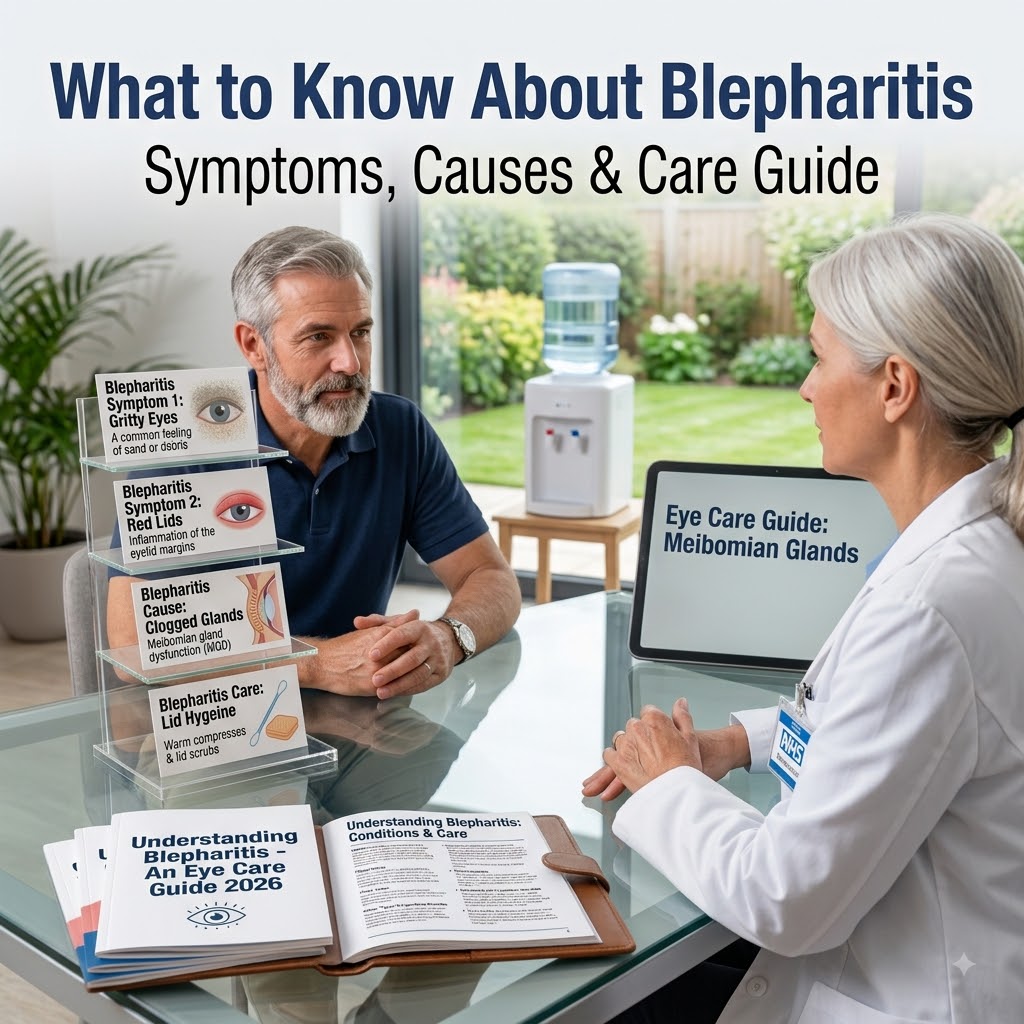
1. Anterior vs. Posterior Blepharitis
Blepharitis is categorized by its location along the eyelid margin:
               [ Eyelid Margin Structure ]
                            |
       +--------------------+--------------------+
       |                                         |
[ Anterior Blepharitis ]             [ Posterior Blepharitis ]
       |                                         |
• Affects outside front edge              • Affects inside back edge
• Base of eyelashes                       • Meibomian oil glands
• Driven by bacteria or scalp dandruff    • Driven by blocked glands (MGD) or rosacea
-
Anterior Blepharitis: Affects the outer front edge of the eyelid where the eyelashes attach. It is most commonly driven by an overgrowth of normal skin bacteria (Staphylococcus) or by seborrheic dermatitis (dandruff of the scalp and eyebrows).
-
Posterior Blepharitis: Affects the inner back edge of the eyelid margin that makes contact with the eye. This form is caused by Meibomian Gland Dysfunction (MGD), where the tiny oil-producing glands become clogged, thickened, or inflamed. It is frequently associated with skin conditions like facial rosacea.
2. Common Symptoms
Blepharitis symptoms are usually worse in the morning because the eyelids remain closed overnight, allowing debris and oil to accumulate.
-
Eyelid Margins: Red, swollen, greasy, or irritated eyelid edges.
-
Flaking and Crusting: Flaky, dandruff-like scales or sticky crusts clinging to the base of the eyelashes.
-
Eye Sensation: A burning, gritty, or foreign-body sensation (feeling like sand is trapped in the eye).
-
Tear Disturbances: Paradoxical combination of watery eyes and dry eye symptoms, caused by poor-quality tear film.
-
Eyelash Changes: In persistent cases, eyelashes may grow abnormally (misdirected), thin out, or temporarily fall out.
3. Associated Factors and Underlying Causes
Blepharitis rarely stems from a single isolated event. Instead, it is usually triggered by a combination of biological and environmental factors:
|
Contributing Factor |
Mechanism / How It Affects Eyelids |
|---|---|
|
Bacterial Overgrowth |
An excess accumulation of standard skin bacteria around the lash roots produces irritants. |
|
Meibomian Gland Dysfunction |
Thickened oil clogs the gland openings, preventing lipids from sealing the tear film. |
|
Seborrheic Dermatitis |
Flaking skin from the scalp, eyebrows, or ears irritates the eyelid margins. |
|
Facial Rosacea |
Systemic skin inflammation causes eyelid blood vessels to dilate and gland secretions to alter. |
|
Demodex Mites |
Microscopic mites that naturally inhabit hair follicles can overpopulate eyelash bases, causing cylindrical dandruff (collarettes). |
4. Daily Eyelid-Hygiene Routine
The primary approach for managing blepharitis is a consistent, daily eyelid-cleansing routine. This routine softens hardened oils, removes crusted flakes, and keeps bacteria or mite levels in check.
1.Apply a Warm Compress:Softens hardened oils in meibomian glands.
Soak a clean washcloth or reusable eye compress in warm (not uncomfortably hot) water. Wring it out and place it over closed eyes for 5 to 10 minutes. Re-warm the cloth as needed to maintain consistent heat.
2.Perform Gentle Eyelid Cleansing:Clears bacterial debris and lash crusts.
Dilute a few drops of mild baby shampoo in warm water, or use a pre-formulated, over-the-counter eyelid cleanser/wipe (often containing tea tree oil or hypochlorous acid). Gently scrub along the base of the eyelashes with closed eyes using a clean swab or pad.
3.Rinse and Dry:Prevents residue accumulation.
Rinse your eyelids thoroughly with cool, clean water and pat dry gently with a fresh towel. Repeat this process once or twice daily during flare-ups, and transition to a daily maintenance routine once symptoms stabilize.
5. Managing Associated Dry Eye Symptoms
Because the oil layer produced by the meibomian glands prevents tears from evaporating too quickly, blepharitis frequently triggers secondary dry eye syndrome.
-
Preservative-Free Artificial Tears: Lubricating eye drops can help flush away surface irritants and restore moisture balance during the day.
-
Avoid Anti-Redness Drops: Avoid drops marketed to “get the red out” (vasoconstrictors), as long-term use can cause rebound redness and further dry out the eye surface.
-
Limit Eye Makeup and Contact Lenses: Pause wearing eyeliner, mascara, or contact lenses during active flare-ups to avoid trapping bacteria against the compromised lid margin.
6. When to Seek Professional Evaluation
While daily hygiene resolves mild symptoms, you should schedule an evaluation with an optometrist, ophthalmologist, or primary care provider if you experience:
-
Persistent or Worsening Pain: Severe pain or significant redness that does not respond to a week of warm compresses.
-
Visual Changes: Blurry vision that does not clear after blinking, or increased sensitivity to light (photophobia).
-
Localized Swelling (Styes/Chalazions): A painful red bump or firm non-tender nodule forming inside or on the eyelid, caused by a blocked gland infection.
-
Unilateral Symptoms: Severe symptoms affecting only one eye, which may point to an alternate diagnosis.
Prescription Treatments
If basic hygiene measures are insufficient, an eye care specialist may prescribe targeted treatments, such as topical or oral antibiotics (like doxycycline to improve oil gland quality), short-term corticosteroid eye drops to break severe inflammation cycles, or specialized office procedures (like thermal pulsation treatments or microblepharoexfoliation) to unblock glands.