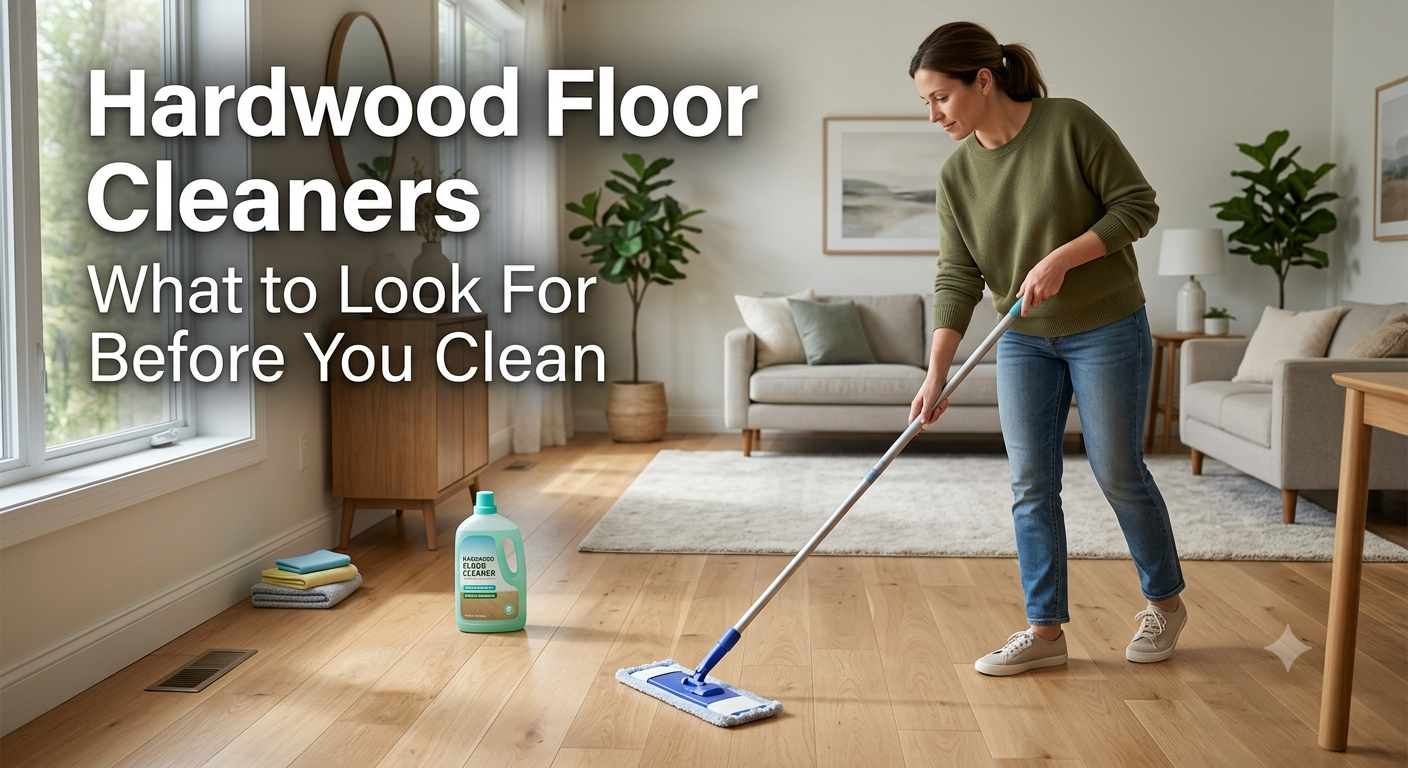
Hardwood Floor Cleaners: What to Look For
Maintaining natural wood flooring requires balancing routine maintenance with appropriate chemical selection. Hardwood adds timeless warmth and value to a home, but it is also sensitive to moisture, harsh chemicals, and mechanical abrasion.
Finding the best hardwood floor cleaner is not about buying the strongest solvent on the shelf—it is about selecting a safe wood floor cleaner formulated specifically for your floor’s finish and following proper care procedures.
Understanding Different Hardwood Floor Finishes
Before choosing any wood floor cleaning products, you must identify the protective finish applied to the wood. Modern and historic floors interact differently with moisture and cleaning agents based on their protective surface:
-
Surface-Sealed Finishes (Polyurethane, Polyacrylic, Aluminum Oxide): Found on most modern solid and engineered hardwood floors. They create a water-resistant barrier on top of the wood. Water-based, pH-neutral cleaners work best for these surfaces.
-
Penetrating Oils and Hard-Wax Oils: Common in modern matte-finish installations. The protective agent soaks into the wood fibers rather than sitting on top. They require specialized oil-refreshing soaps and must never be cleaned with heavy detergents.
-
Varnished, Shellacked, or Waxed Wood: Common in older or historic homes. Waxed floors are vulnerable to water damage and chemical stripping. Liquid cleaners can break down the wax layer, turning it cloudy; these floors require wax-based cleaners or dry-buffing methods.
Always refer to your flooring manufacturer’s written warranty and care instructions before applying new cleaning solutions.
What to Look for in a Hardwood Floor Cleaner
When evaluating a hardwood floor cleaner, search for formulations designed to lift dirt without compromising the protective finish:
-
pH-Neutral Formulation: Acidic or alkaline solutions degrade protective coatings over time, leaving wood vulnerable to moisture infiltration.
-
Residue-Free Cleaners: Avoid products containing harsh waxes, silicones, or acrylic restorers. These leave a gummy film that attracts dirt and dulls the floor’s luster.
-
Fast-Drying Properties: Formulations with fast-evaporating carrier agents help prevent moisture from lingering near seams and micro-beveled edges.
Spray Cleaners vs. Concentrated Cleaners
               ┌────────────────────────────────────────────────────────┐
               │           Selecting the Right Cleaner Format           │
               └───────────────────────────┬────────────────────────────┘
                                           │
                 ┌─────────────────────────┴─────────────────────────┐
                 ▼                                                   ▼
 ┌───────────────────────────────┐                   ┌───────────────────────────────┐
 │   Ready-to-Use Spray Cleaner  │                   │   Concentrated Floor Cleaner  │
 ├───────────────────────────────┤                   ├───────────────────────────────┤
 │ • No mixing required          │                   │ • Cost-effective for large    │
 │ • Low moisture control        │                   │   surface areas               │
 │ • Prevents over-wetting       │                   │ • Requires precise measuring  │
 │ • Ideal for spot-cleaning     │                   │ • Risk of over-dilution       │
 └───────────────────────────────┘                   └───────────────────────────────┘
Hardwood Floor Cleaning Comparison
|
Cleaner Type |
General Use |
Potential Advantage |
Important Consideration |
|---|---|---|---|
|
Ready-to-Use Spray Cleaner |
Routine maintenance on surface-sealed floors |
Minimizes water output; no mixing required |
Higher cost per ounce compared to concentrates |
|
Concentrated Floor Cleaner |
Large-area cleaning of surface-sealed floors |
Cost-effective for expansive layouts |
Over-concentrating can leave a dull, sticky film |
|
Manufacturer-Recommended Cleaner |
Warranty compliance for specialized finishes |
Guaranteed chemical compatibility |
Often priced higher; restricted availability |
|
Specialized Oil/Wax Cleaner |
Oiled, waxed, or untreated historical floors |
Replenishes protective oils while cleaning |
Incompatible with standard polyurethane finishes |
How to Clean Hardwood Floors Safely
A complete hardwood floor care routine relies on gentler cleaning methods and controlled moisture:
[Phase 1: Dry Removal] ──► [Phase 2: Light Spray] ──► [Phase 3: Microfiber Mop]
(Remove grit & dust)      (Apply pH-neutral cleaner)  (Wipe damp, never soaking)
-
Dry Dust Removal First: Sweep or vacuum using a hard-floor setting (with the beater bar turned off) to remove abrasive dirt, sand, and pet hair.
-
Light Application: Mist the cleaner for hardwood floors lightly onto the floor or directly onto a microfiber mop pad. Never pour liquid solutions directly onto bare or finished wood.
-
Wipe with Microfiber: Mop along the direction of the wood grain using a damp microfiber pad. Microfiber traps fine particles without scratching soft finishes.
-
Allow to Air Dry: Ensure the surface dries within 1 to 2 minutes. If moisture lingers, wipe dry with a clean microfiber towel.
Common Hardwood Floor Cleaning Mistakes
Avoid these frequent practices that shorten the lifespan of wood flooring:
-
Excessive Moisture: Wet-mopping or using standing buckets allows water to seep between floorboards, causing swelling, cupping, and warping.
-
Steam Mops: Steam forces high-pressure heat and moisture into the micro-cracks of the finish, causing peeling, cloudiness, and structural wood degradation.
-
Using Vinegar or Harsh Solvents: Diluted vinegar is acidic (typically pH 2–3) and degrades polyurethane finishes over time, leaving the wood looking dull.
-
Abrasive Scrubbing Tools: Steel wool, scouring pads, or stiff-bristled brushes create micro-scratches in the protective topcoat.
-
Mixing Cleaning Chemicals: Combining different commercial products or homemade solutions can release harmful fumes and create destructive chemical reactions on the wood finish.
Product Selection Checklist
Before applying any new hardwood floor cleaning guide recommendations, follow this step-by-step checklist:
-
[ ] Identify Floor Type: Confirm whether your floor is polyurethane-sealed, hard-waxed, oiled, or shellacked.
-
[ ] Check Warranties: Review manufacturer guidelines to ensure the product won’t void existing coverage.
-
[ ] Review Product Label: Verify the cleaner states compatibility with your specific floor finish.
-
[ ] Inspect Ingredients: Choose pH-neutral formulations free from heavy waxes, oil soaps, or harsh acids.
-
[ ] Select Application Tool: Pair the cleaner with a clean, flat-head microfiber mop.
-
[ ] Test in an Inconspicuous Area: Apply a small amount in a closet or under furniture to test for cloudiness or finish reactions before cleaning the main space.
FAQ
What is the best cleaner for hardwood floors?
The ideal cleaner depends on your floor’s finish. For most modern, surface-sealed (polyurethane) floors, a pre-mixed, pH-neutral spray cleaner designed for wood flooring offers the safest results.
Can I use regular floor cleaner on hardwood?
No. Multi-surface cleaners, vinyl cleaners, or tile detergents often contain harsh chemicals or leave residues that dull, streak, or damage hardwood finishes.
How often should hardwood floors be cleaned?
Dry-sweep or dust-mop high-traffic areas daily to every few days to remove scratch-causing grit. Damp-mop with a specialized wood cleaner weekly or biweekly depending on foot traffic.
Can too much water damage wood floors?
Yes. Excess water penetrates seams, micro-bevels, and finish cracks, leading to cupping, warping, discoloration, and mold growth underneath the planks.
Should I use a steam cleaner on hardwood?
No. Flooring associations and manufacturers warn against using steam mops on hardwood. Pressurized heat forces moisture into the wood fibers, damaging the finish and core.
How can I avoid cleaning residue?
Use pH-neutral, streak-free cleaners and avoid self-polishing waxes or oil soaps. Ensure microfiber pads are clean, and do not over-apply concentrated formulas.
Can I use vinegar on hardwood floors?
Vinegar is acidic and dulls or strips protective polyurethane finishes over time. It is not recommended for routine hardwood floor maintenance.
How do I clean everyday spills?
Wipe up spills immediately using an absorbent cloth or paper towel. Lightly spray the spot with a safe wood floor cleaner and wipe dry with a microfiber pad.
Conclusion
Keeping your floors clean requires understanding your wood’s finish and keeping moisture levels low. By avoiding steam mops and acidic DIY solutions, selecting a pH-neutral cleaner, and using a damp microfiber mop, you can preserve your floor’s finish and natural beauty for years to come.