Guide to Know About 3 Causes of Sudden Itching in Older Adults
Itching, clinically referred to as pruritus, is one of the most common skin complaints among older adults. While a localized itch from a bug bite or a temporary dry patch is a common nuisance, the sudden onset of generalized or intense itching can be unsettling.
As the body ages, the structure of the skin changes, the immune system shifts, and overall health profiles become more complex. Understanding possible causes of sudden itching involves looking at three broad, medically responsible categories: age-related skin dryness, specific dermatological conditions or external irritants, and underlying systemic health changes or medication side effects.
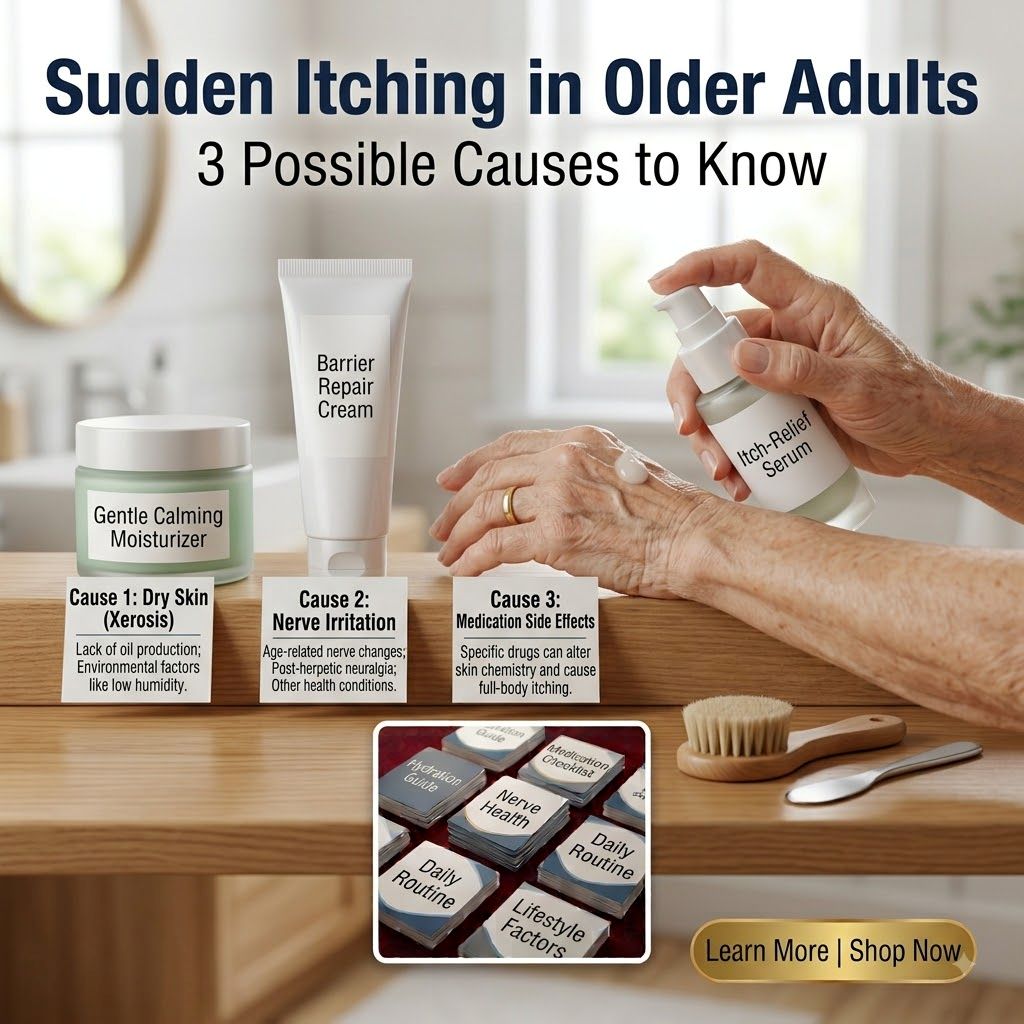
1. Dry or Irritated Skin (Xerosis)
The most frequent underlying cause of itching in older adults is xerosis, the medical term for pathologically dry skin. Age-related biological changes naturally impair the skin’s ability to retain moisture and protect itself.
Biological Skin Aging
-
Loss of Natural Oils: The production of sebum (the skin’s natural oil) and essential lipid molecules like ceramides drops significantly with age. This weakens the stratum corneum (the outermost layer of skin).
-
Thinner Skin Barrier: Epidermal cell turnover slows down, and the skin becomes structurally thinner and less elastic. Moisture evaporates from the skin much faster (a process called transepidermal water loss).
-
Nerve Sensitivity: Age-related changes in the tiny nerve fibers within the skin can cause them to fire misdirected “itch” signals to the brain, even when minimal external irritation is present.
Environmental and Lifestyle Triggers
Dry skin can quickly cross the threshold into sudden, severe itching due to everyday environmental changes:
-
Indoor Heating and Air Conditioning: Central heating in winter or low-humidity air conditioning in summer strips ambient moisture from the air, exacerbating skin dryness.
-
Hot Showers and Harsh Soaps: Frequent bathing in hot water or using alkaline, scented soaps washes away the remaining protective lipids, leaving skin feeling tight, cracked, and intensely itchy.
-
Dehydration: Decreased thirst perception is common in older adults, and reduced fluid intake directly affects skin hydration.
When skin becomes severely dry, microscopic cracks form in the epidermal barrier. This triggers localized inflammation, initiating an “itch-scratch cycle” where scratching damages the skin further, leading to even greater irritation and heightened risk of secondary skin infections.
2. Primary Skin Conditions or Contact Irritants
Sudden itching may also stem from primary skin conditions or sudden allergic/irritant reactions occurring directly on the surface.
+--------------------------+----------------------------------------+-------------------------------------+
| Skin Condition Category  | Common Causes / Triggers               | Typical Visual Appearance           |
+--------------------------+----------------------------------------+-------------------------------------+
| Eczema / Dermatitis      | Barrier degradation, contact irritants | Red, flaky, coin-shaped, or scaly   |
+--------------------------+----------------------------------------+-------------------------------------+
| Allergic / Hives         | New detergents, topical creams, plants | Raised, red or skin-colored welts   |
+--------------------------+----------------------------------------+-------------------------------------+
| Infestations             | Scabies mites (common in care homes)   | Intense nighttime itching, burrows  |
+--------------------------+----------------------------------------+-------------------------------------+
| Autoimmune Conditions    | Bullous pemphigoid, psoriasis          | Flaky plaques or tense fluid blisters|
+--------------------------+----------------------------------------+-------------------------------------+
-
Dermatitis and Eczema: Variants like nummular eczema (coin-shaped itchy patches) or stasis dermatitis (itching and swelling in the lower legs due to poor circulation) are particularly common in older populations.
-
Contact Allergies: Aging skin becomes more sensitive to external chemicals. A sudden switch in laundry detergents, body washes, essential oils, or topical medications can spark an allergic or irritant contact dermatitis flare-up.
-
Scabies Infestations: While uncomfortable to discuss, scabies (a tiny microscopic mite) can cause sudden, overwhelming itchiness—especially at night. Outbreaks are notably more frequent in group living settings, senior communities, or long-term care facilities.
-
Autoimmune Blistering Disorders: Conditions like bullous pemphigoid primarily affect older adults. In its early prodromal stage, it can manifest as a persistent, intense itch with non-specific red patches weeks or months before actual fluid-filled blisters emerge.
3. Underlying Health Conditions or Medication Effects
In some cases, sudden or persistent itching occurs on skin that shows no obvious rash, bumps, or dry flaking. This type of itch—referred to as pruritus without primary skin lesions—can point to internal systemic factors or medication interactions.
Systemic Health Factors
The liver, kidneys, endocrine system, and blood vessels all play a role in filtering waste and regulating hormones. When these systems experience stress or dysfunction, metabolic byproducts can build up in the skin or bloodstream, activating itch receptors:
-
Kidney Health: Reduced renal function (chronic kidney disease or end-stage renal illness) can lead to a buildup of waste products that cause generalized, persistent itching.
-
Liver and Biliary Function: Conditions that impair bile flow (such as gallstones, hepatitis, or cirrhosis) cause bile salts to accumulate in the bloodstream and skin, triggering widespread itching.
-
Thyroid and Endocrine Issues: Both hyperthyroidism (overactive) and hypothyroidism (underactive) can disrupt skin hydration and body temperature regulation, causing generalized itch. Diabetes can also cause itching due to poor circulation or nerve changes.
-
Hematologic (Blood) Conditions: Conditions affecting red or white blood cells, such as iron-deficiency anemia or polycythemia vera, can present with unexplained skin itching (often triggered by warm baths or showers).
Medication Side Effects
Older adults are more likely to take multiple daily medications (polypharmacy). A sudden onset of itching can sometimes be traced back to a newly prescribed drug, an increased dose, or an interaction between medications:
-
Blood Pressure Medications: ACE inhibitors and calcium channel blockers can trigger generalized itching as an adverse reaction.
-
Diuretics (“Water Pills”): Commonly prescribed for heart or kidney conditions, diuretics increase fluid excretion, which can drastically dehydrate the skin from the inside out.
-
Pain Relievers & Opioids: Prescription pain medications can stimulate histamine release or act directly on central nerve pathways, causing systemic itching without a physical rash.
-
Cholesterol-Lowering Drugs: Certain statins or niacin supplements are known to cause flushing, skin dryness, or itching reactions.
When to Seek Professional Medical Evaluation
While most episodes of itching stem from manageable issues like dry skin or minor seasonal adjustments, sudden or persistent symptoms should never be ignored.
Schedule an appointment with a primary care physician or dermatologist if:
-
Duration: The itching lasts longer than two weeks and does not improve with standard over-the-counter moisturizers or basic self-care.
-
Severity: The itch is severe enough to interrupt sleep, cause significant distress, or interfere with daily activities.
-
Unexplained Onset: It begins suddenly across the entire body without any clear trigger, rash, or obvious environmental cause.
-
Accompanying Symptoms: The itching is accompanied by unexplained weight loss, chronic fatigue, night sweats, fever, or yellowing of the eyes/skin (jaundice).
-
Signs of Infection: Open sores, extreme redness, pus, or severe swelling develop from repeated scratching.
A healthcare provider can perform a comprehensive evaluation—reviewing current medications, performing targeted blood tests, and assessing skin barrier health—to identify the exact cause and recommend safe, effective relief strategies.